A scratchy violin sound is completely normal for beginners, and it almost always comes from the bow rather than the violin itself. The three usual causes are too much bow pressure, a bow moving too slowly, and a bow that drifts too close to the bridge or the fingerboard. Rosin, loose bow hair and a poorly set-up instrument can add to the problem. With good guidance, most children produce a noticeably cleaner tone within the first months of lessons.
Why the violin is hard to make sound good
Unlike piano, where pressing a key always produces a clean note, violin tone is created moment by moment. The player controls three things at once: how hard the bow presses into the string, how fast it travels and where it touches the string. If any one of them is off, the sound turns scratchy, squeaky or thin.
That is why the first sounds from a beginner can be rough. It is not a sign of low talent. It is the normal starting point.
The bow: the most common culprit
Too much pressure. Kids often press hard to “make it louder.” Excess weight crushes the string, and the result is a crunch instead of a tone.
Too slow for the pressure. Heavy pressure with a slow bow scratches. A faster stroke with lighter weight usually sounds cleaner.
Wrong contact point. The best tone for most beginner notes comes from bowing about halfway between the bridge and the end of the fingerboard. Too close to the bridge sounds harsh; too close to the fingerboard sounds airy and weak.
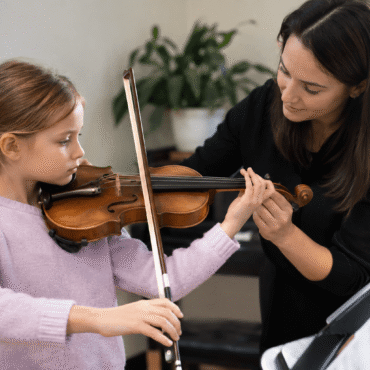
Crooked bow. When the bow drifts at an angle instead of staying parallel to the bridge, it wanders along the string and you get squeaks. Kids usually cannot feel this, but they can see it in a mirror.
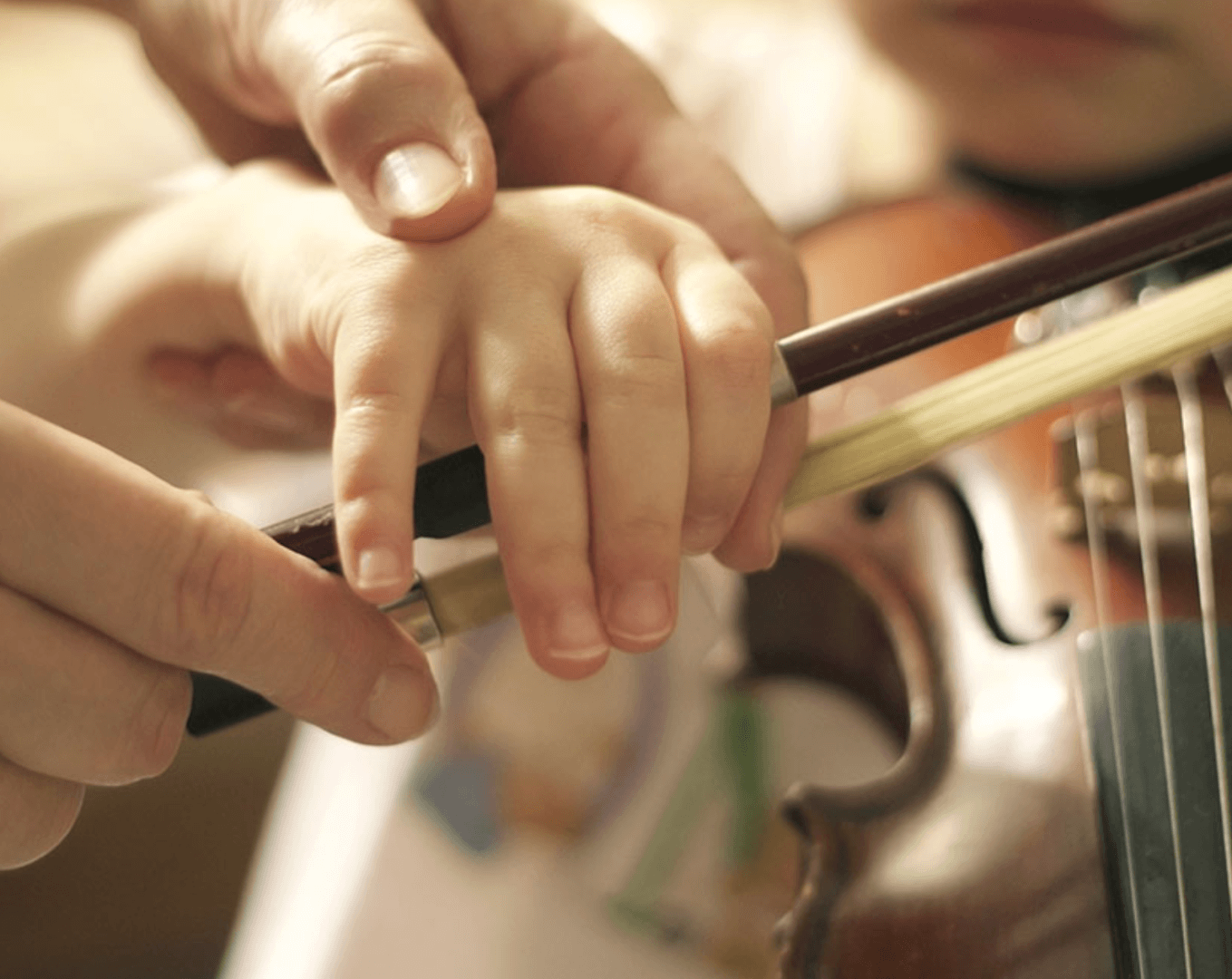
Tense bow hold. A stiff thumb or locked fingers make the bow bounce and shake. A relaxed, flexible hold gives far more control.
Equipment problems that make it worse
Sometimes technique is not the only cause. Check these:
- Rosin. Bow hair needs rosin to grip the string. Too little rosin makes a faint, slippery sound; far too much makes it gritty and dusty.
- Bow hair tension. Hair that is too loose lets the stick touch the string. Hair that is over-tightened makes control difficult. Always loosen the bow after playing.
- Old or false strings. Worn strings can sound dull or uneven even with good technique.
- Setup. A bridge that leans, strings set too high or a poorly fitted instrument make clean playing harder. Very cheap instruments are a common cause. We discussed this in whether to rent or buy a beginner violin.
One exercise we give almost every beginner is slow bows on an open string, listening for an even sound all the way from the frog to the tip. A mirror helps them see whether the bow stays straight.
Five minutes of these at the start of practice usually pays off faster than playing pieces with a scratchy tone.
How long until it sounds better?
Every child is different, but steady practice and regular lessons bring steady change. A clean tone on open strings usually comes before a clean tone across a whole song. For a longer view of violin milestones, read how long it takes to learn violin.
Try not to react to every squeak at home. Kids experiment more when the room is relaxed.
Violin lessons for kids in Sugar Land
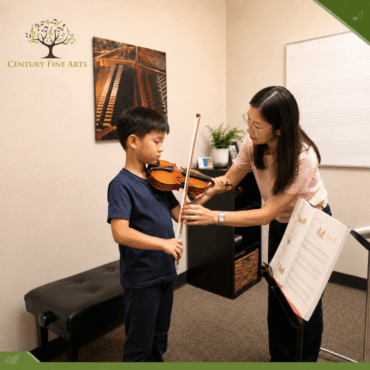
At Century Fine Arts, we recommend that kids begin violin around age 5, and teachers work on tone, bow hold and posture from the very first lesson. Read more about when a child should start violin.
Explore our violin lessons or book a free 15-minute trial. Call 832-400-5980 or visit 3527 Hwy 6 S., Suite 220, Sugar Land.