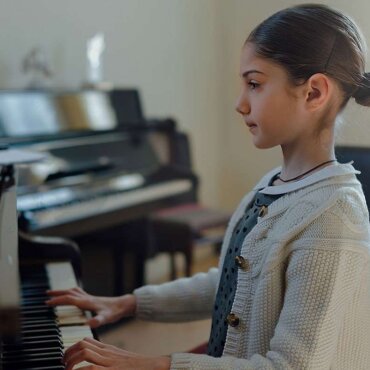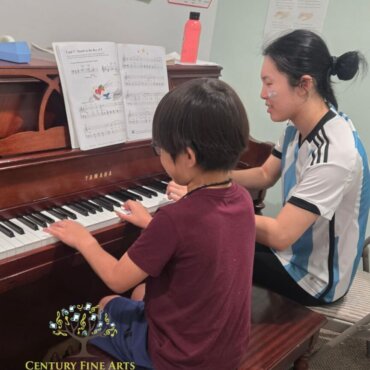
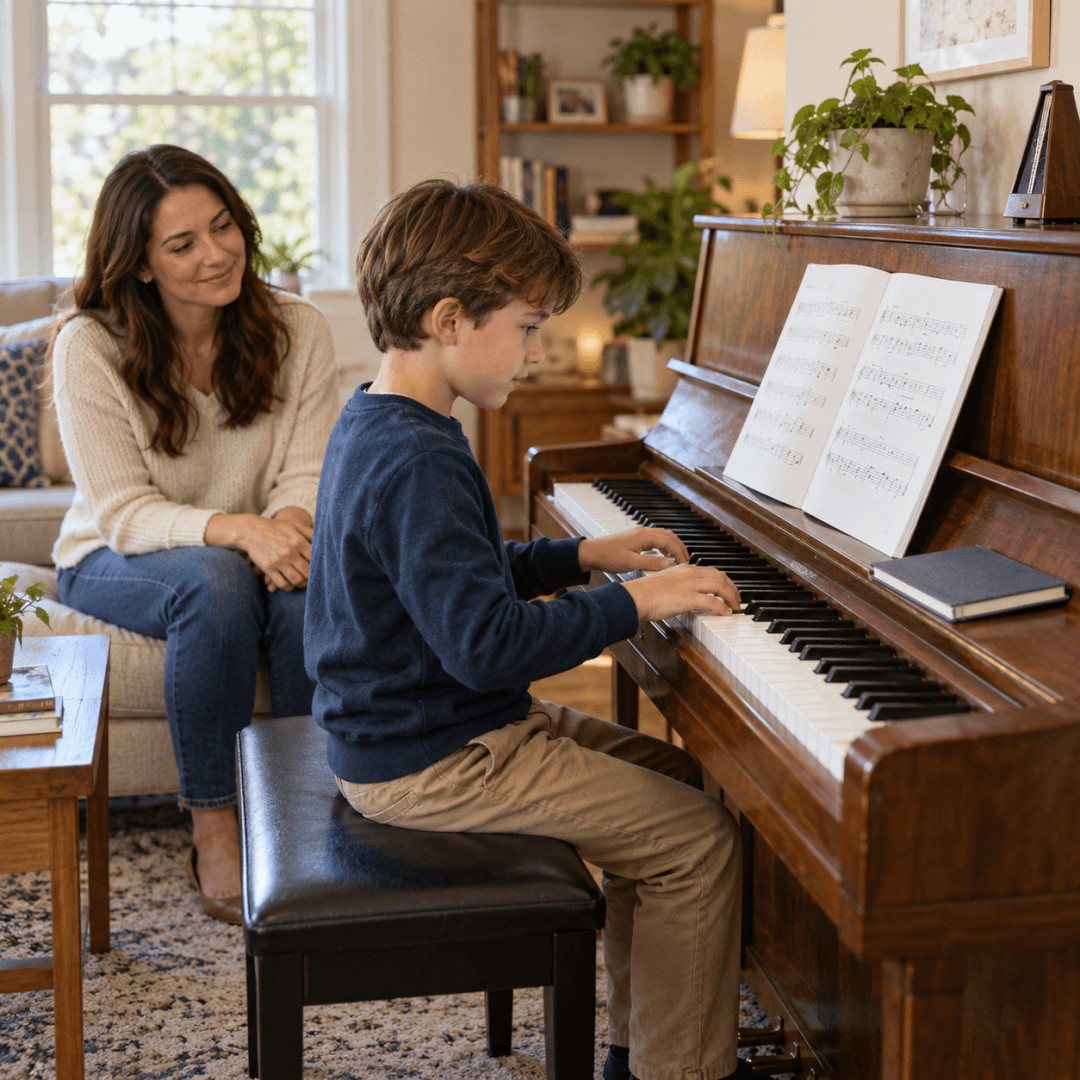
No, you do not need to read music before you start piano. Plenty of students sit down at their first lesson without knowing a single note name. Reading is something you learn alongside playing, not a requirement you clear beforehand. That said, if you want to play classical pieces, keep improving for years or play with other musicians, learning to read becomes very valuable, and most lesson plans build it in gradually.
What “reading music” means on piano
Pianists have a bit more to read than most other players. The music is written on two lines of staff at the same time, with the upper one (treble clef) mostly for the right hand and the lower one (bass clef) mostly for the left. Besides the notes, there are rhythms, finger numbers, loud and soft markings and phrase marks to follow.
That sounds like a lot to take in, but it comes in small pieces. A beginner book usually starts with a few notes around middle C and only adds more once those feel easy.
Different ways to start
Reading first. Many traditional method books teach reading from the first page. The student learns a few keys, finds them on the staff and plays short pieces with them. It can feel slow at the start, but it gives a solid base.
By ear and by pattern. Some students learn chords and copy melodies they hear. This is fun and builds a good ear, and it is how many pop and worship pianists play. The risk is hitting a ceiling later when a piece is too complex to figure out by ear.
A blend. Most modern teachers mix the two: real reading, plus chord patterns, simple improvising and playing familiar songs. Students stay motivated because they can play something they recognize while their reading catches up.
Why reading is worth learning
- Access to more music. Thousands of pieces, from beginner books to concert repertoire, become available once you can read them.
- Faster learning. A strong reader can learn a new piece in days instead of weeks of trial and error.
- Playing with others. Accompanying a singer, joining an ensemble or playing at school events usually means reading a part.
- Theory makes sense. Scales, keys and chords are easier to understand when you can see them on the page. We covered this in what music theory is and whether students need it.
How long until reading feels easy
With regular practice, most students can read simple beginner pieces after a few months. Reading well, meaning you can open a new easy piece and play it without much trouble, takes longer and depends on how much you read. The best practice for this is reading lots of easy music, rather than spending weeks on one difficult piece.
For a broader picture of piano milestones, see how long it takes to learn piano.
What if reading feels hard?
Some students struggle with reading, and that is normal. A few things help:
- use flashcards or a note-naming app for five minutes a day;
- say note names out loud while playing;
- read the rhythm alone first by clapping it, then add the notes;
- choose easy material for reading practice, below your playing level.
Adult beginners sometimes worry that reading will be the hardest part. In practice, adults often pick up reading quickly because they understand the system logically. Read more in can adults learn piano from scratch.
Piano lessons in Sugar Land for every starting point
At Century Fine Arts, students begin wherever they are, whether they have never seen sheet music or already read a little. Teachers adjust the balance between reading, ear work and repertoire to each student’s goals.
Learn more about our piano lessons or book a free 15-minute trial. You can also call 832-400-5980 or visit us at 3527 Hwy 6 S., Suite 220, Sugar Land.