Yes. Plenty of adults learn violin, and they often get through the first books quickly because they follow instructions well, read faster than children and practice with a goal in mind. What makes it hard is mostly physical. Holding the violin and the bow feels strange at first, and you need some patience while your sound slowly improves. With a lesson each week and 20 to 30 minutes of practice on most days, many adults can play simple pieces with a nice tone within a year, and some join a beginner ensemble or a fiddle group soon after that.
Why adults choose violin
Adults rarely pick violin by accident. Most have loved the sound for years, played as a child and quit, or want to join a community orchestra, a church ensemble or a folk group. That built-in motivation is a huge advantage. You are practicing because you want to, which carries you through the slow parts.
What adults find easier
Adults bring tools children do not have yet:
- Understanding. If a teacher explains why the bow should stay parallel to the bridge, an adult grasps the physics and applies it.
- Reading. Many adults already read some music from choir, band or piano, and those who do not usually learn it quickly.
- Self-direction. Adults can plan practice, target problem spots and use recordings to check themselves.
- Musical taste. Knowing what you want to play, whether Celtic fiddle tunes, Bach or film themes, keeps lessons focused.
The harder parts for adults
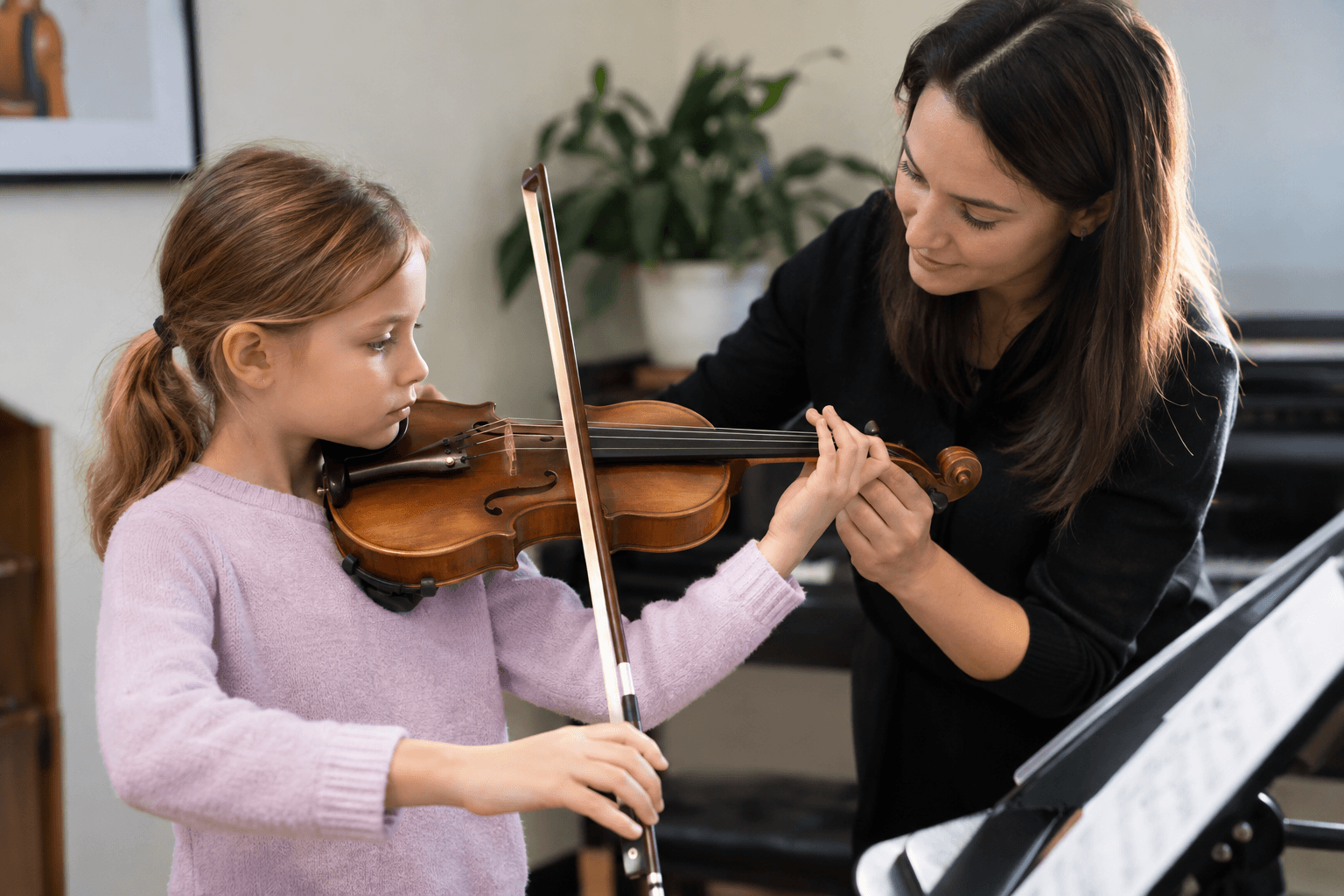
Getting comfortable. The violin sits between your jaw and your left shoulder, and many adults tighten the neck and shoulders to hold it there. The right chinrest and shoulder rest for your body help a lot, so do not be surprised if your teacher spends a good part of the first lessons adjusting them.
Hand flexibility. The left hand has to rotate so fingers can reach all four strings. Adults may need a few weeks of gentle stretching and relaxed practice before this feels natural.
Patience with sound. Violin squeaks more than most instruments in the first months. Adults, who are used to being competent at things, can find this frustrating. It passes. Bow control improves steadily with practice.
Time. Work and family compete with practice. Short daily sessions beat long weekend ones, so many adults practice before work or during a lunch break.
How to set yourself up for success
Rent or buy a full-size violin that has been properly set up by a string shop. A slipping peg or a high bridge makes everything harder. Our post on renting or buying a violin explains what to look for.
Record yourself every few weeks. Progress on violin is gradual, and recordings show how far you have come.
Listen to violin music daily. Hearing good tone and intonation trains your ear to aim for it.
Set a near-term goal, such as playing a short piece for friends, joining a beginner string group or performing in a student recital.
Is viola a good alternative?
Some adults find the viola, which is slightly larger and lower-pitched, more comfortable for their arm length, and they love its warm sound. It also opens doors in community orchestras, which often need violists. A teacher can help you decide which fits your body and taste.
How long until you can play with others?
Many adults are ready for simple ensemble playing within the first one to two years. Community and church groups in the greater Houston area welcome beginners at different levels, and playing with others is one of the most rewarding parts of learning a string instrument. Our timeline in how long it takes to learn violin shows the stages most students move through.
Adult violin lessons in Sugar Land
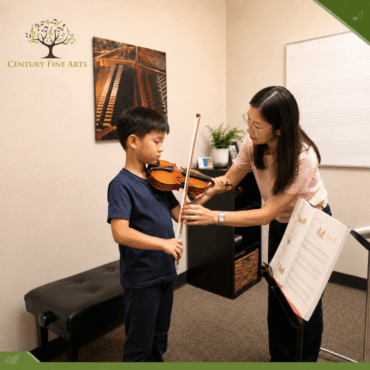
Century Fine Arts teaches private violin lessons for adults and seniors as well as children and teens. Lessons follow your goals and pace, whether you are brand new or returning after years away.
Book a free 15-minute trial lesson or call 832-400-5980. Our studio is at 3527 Hwy 6 S., Suite 220, in Sugar Land.