No, it is not too late. Adults learn instruments successfully at 30, 50 and 70. You may not follow the same path as a child who starts at six, but you bring real advantages: you understand why you are practicing, you can read and absorb theory quickly, and you choose music because you want to, not because someone signed you up.
Learning as an adult is different from learning as a child, but it is very much possible.
Where adults have an advantage
Adults usually learn efficiently. If a teacher explains how a chord is put together, an adult can connect it to songs they already know and use it the same day. Adults are also better at hearing their own mistakes, so they can spend practice time on the spot that is actually giving them trouble.
Motivation helps too. A lot of children practice because someone reminds them. Most adults who start lessons have wanted to play for years and finally made the time, and that tends to keep them going.
Adults also know their taste. Telling your teacher you want to play Billie Eilish, Bach or 1970s soul gives the lessons a clear direction from day one.
What is harder for adults
Fine motor skills take longer to train. Your brain may understand a passage long before your fingers can play it smoothly, and that gap can be frustrating. Patience is part of the process.
Time is the other challenge. Work, family and commuting on Highway 6 do not leave much space in the day. The good news is that short, regular practice works. Fifteen to twenty minutes a day, five days a week, produces steady progress for most adult beginners.
Self-consciousness can also hold adults back. Many worry about sounding bad in front of a teacher. Teachers hear beginners every day, and a good one will make the room feel safe for mistakes.
Which instrument is easiest to start as an adult?
There is no single answer, but here is a rough guide:
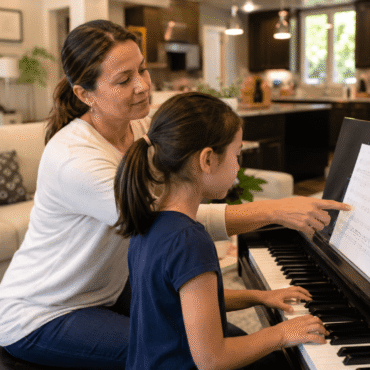
Each instrument starts a little differently. On piano you see every note in front of you, so early progress is quick, and it gives you a good general understanding of music. With guitar, most adults can accompany a few songs within a few months, once the fingertips get used to the strings. Singing needs no equipment, and you can practice anywhere, including in the car. Violin takes longer before it sounds polished, but adults who love classical music often find it worth the wait.
Pick the instrument whose sound you enjoy most, since that is the one you will want to practice.
Goals that fit your life
Goals work best for adults when they are small and specific. “Become a great pianist” is hard to measure. “Play three songs for my family by summer” or “accompany myself on one song by December” is something you can actually check off, and reaching it makes it easier to keep going.
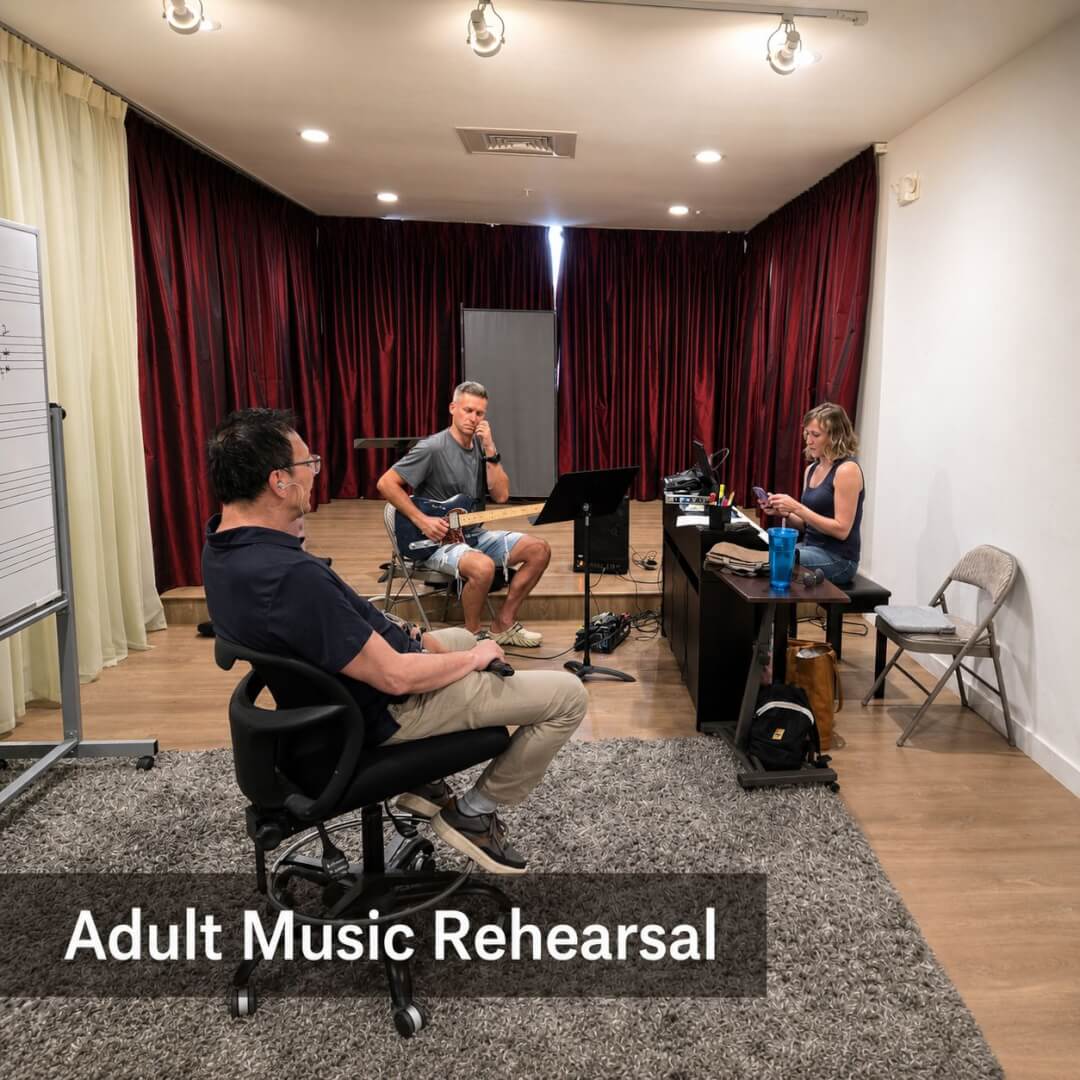
Many of our adult students also enjoy performing in recitals once they feel ready. It is optional, but playing for a supportive audience is a great milestone.
Do adults need lessons, or can they self-teach?
You can certainly learn a lot from apps and videos between lessons. What they miss is your body. Adults often hold tension in the shoulders or wrists, and it usually takes someone watching from the side to notice it. Having a lesson on the calendar every week also helps, especially in the months when work gets busy and practice would otherwise slip.
Our article on private lessons and mentorship explains why one-on-one guidance makes such a difference.
Music lessons for adults and seniors in Sugar Land
Century Fine Arts teaches private lessons in piano, violin, guitar and voice for children, teens, adults and seniors. Lessons follow your pace and your goals, and private-lesson tuition includes access to ear training and theory classes and the chance to perform in recitals.
Curious whether it is right for you? Book a free 15-minute trial lesson, browse our lesson options, or call 832-400-5980. The best time to start was years ago. The second-best time is this week.