The first voice lesson is mainly a chance for the teacher to get to know your voice. You will talk about your goals and the music you like, do some gentle warm-ups, find out where your voice is comfortable, sing a short song or phrase and go home with two or three things to practice. Nobody expects a finished performance. Most people say afterward that it was far more relaxed than they thought it would be.
If you feel nervous, it can help to know the usual order of things.
A short conversation about you
The lesson begins with a conversation. Your teacher will ask what brought you in. Some people sing in a church choir and want more control, some children want a lead part in the school musical, and some adults have just always wanted to try. You will probably be asked what music you listen to, whether you have sung in a choir or had lessons before, whether there is a song you would like to learn and whether your voice ever feels tired after singing.
After the talk you will do a few warm-ups, usually humming and some easy slides up and down. They can feel odd at first.
Warm-ups loosen the muscles around the voice and show the teacher how your voice moves between low and high notes, where it feels easy and where it tightens.
Finding your range
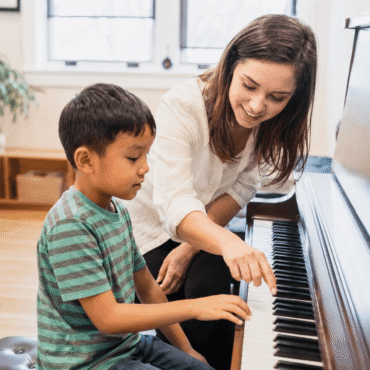
Your teacher will probably play notes on the piano and have you sing them, moving up and down until your voice starts to strain. This is not a test you can fail. It simply helps the teacher choose songs in keys that suit you. Many beginners discover that songs felt hard before only because they were pitched too high or too low.
Breathing
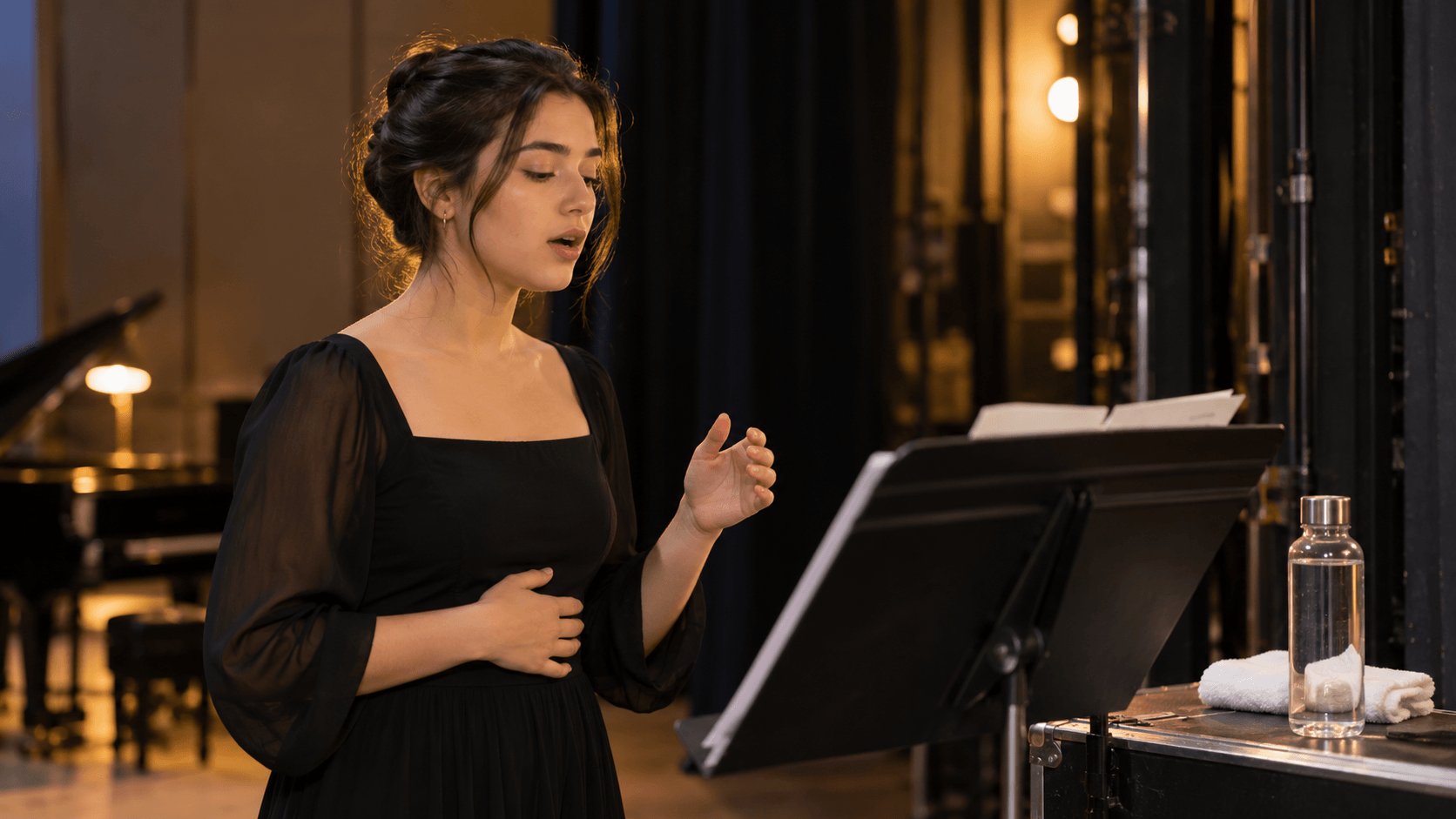
Most first lessons spend a few minutes on breathing. The teacher may ask you to put a hand on your stomach and feel it move out as you breathe in, while your shoulders stay down. Then you breathe out slowly and evenly on a hiss or a long note. Breathing affects pitch, tone and how long you can sing, so you will come back to it in many lessons.
Singing something
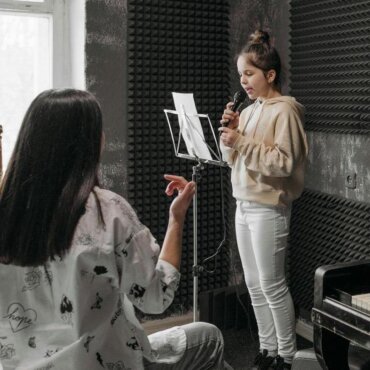
Near the end you will usually sing. It might be a song you brought, a simple folk tune or a few lines the teacher picks. The teacher listens to your pitch, tone, breathing and any tension, and then gives you a couple of specific suggestions, for example to drop your jaw a little on a high note or to take a breath in a different spot.
If you brought a song, bring a lyric sheet or a link to a recording so your teacher can play along or find the key.
Homework
Most students leave with a short practice plan: a couple of warm-ups, one breathing exercise and a song to work on. Ten to fifteen minutes a day is a good start for adults and teens, and less for younger kids. Many teachers suggest recording the lesson or the exercises on your phone so you remember how they should sound.
Getting ready for the first lesson
There is not much you need to do. Drink water during the day and bring a bottle with you. Wear something comfortable. If there is a song you like, bring the lyrics or a recording. And try not to worry about sounding perfect, since the teacher is used to nervous students and wobbly notes.
Worried you might be tone-deaf? Read can anyone learn to sing before your lesson. For parents of young singers, our guide to what age a child should start voice lessons explains what lessons look like for kids.
Book a first voice lesson in Sugar Land
Century Fine Arts offers private voice lessons for children from about age 7, teens and adults. Your first step can be a free 15-minute trial lesson, a short, friendly preview of what regular lessons feel like.
Book your trial online or call 832-400-5980. Our studio is at 3527 Hwy 6 S., Suite 220, in Sugar Land.