The cost of music lessons depends mostly on five things: lesson length, the teacher’s training and experience, whether lessons are private or in a group, where the lessons happen, and what is included beyond the weekly lesson itself. Two quotes that look different on paper can turn out to be close once you compare what each one covers.
If you are comparing music schools and private teachers around Sugar Land and Fort Bend County, these are the questions that explain most of the difference.
Lesson length
Most private lessons run 30, 45 or 60 minutes. Beginners, especially young children, usually start with 30 minutes. As pieces get longer and technique more detailed, students often move to 45 minutes, and advanced students preparing for auditions or competitions may need a full hour. Longer lessons cost more per week, but they are not always better for a young beginner who loses focus after 25 minutes.
Teacher training and experience
A teacher with a music degree, years of teaching and a track record of students who keep progressing usually charges more than a high school student offering lessons on the side. For a complete beginner, the difference matters more than people expect, because early habits in posture, hand position and breathing are much easier to build right than to fix later.
When comparing teachers, ask about their own training, how long they have taught and whether they regularly work with students your child’s age.
Private versus group lessons
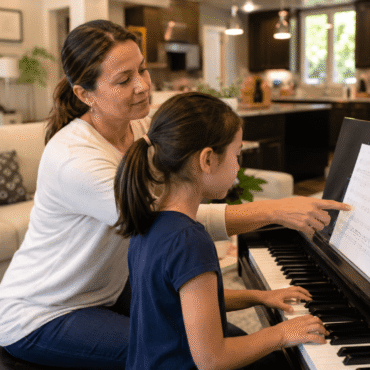
Group classes cost less per student, and they can be a fun way to try an instrument or learn alongside friends. Private lessons cost more because the entire lesson focuses on one student. The teacher can adjust pacing, catch mistakes immediately and choose music that fits that student. We compared both formats in private lessons vs small group classes.
Studio, in-home or online
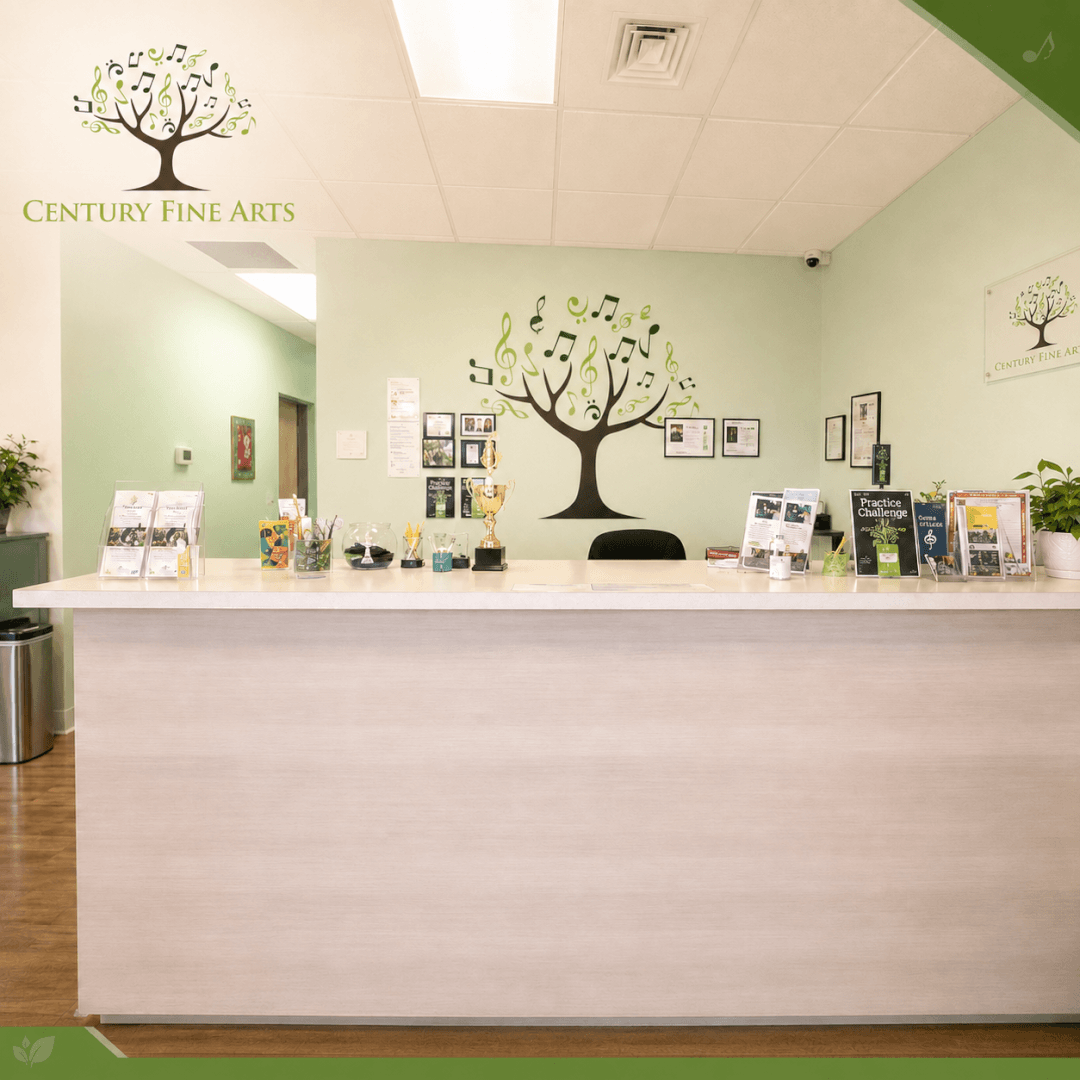
In-home lessons usually cost more because the teacher’s travel time is built into the price. Online lessons can be convenient, though young beginners often struggle with them, as we explained in in-person vs online lessons. Studio lessons fall in between and come with real instruments, a quiet room and a place built for learning.
What is included
This is where comparisons often go wrong. Some tuition covers only the weekly lesson. Other programs bundle extras such as:
- recitals and performance opportunities;
- music theory or ear training classes;
- a studio piano or instrument to use during lessons;
- make-up lesson policies when your child is sick;
- progress feedback and goal setting.
At Century Fine Arts, private-lesson tuition includes the opportunity to perform in recitals and to join ear training and theory classes. If you buy those separately elsewhere, they add up.
Costs beyond tuition
Budget for a few other items so nothing surprises you:
- The instrument. Renting a violin, buying a guitar or keeping a keyboard or piano at home. Our posts on renting or buying a violin and whether you need a piano at home can help.
- Books and sheet music. Method books are usually inexpensive and last months.
- Accessories. Strings, rosin, a music stand, a metronome or a tuner.
- Registration or recital fees, if a school charges them.
Is the cheapest option the best value?
Not always. A lower price can mean shorter lessons, less experienced teachers or fewer extras. On the other hand, the most expensive option is not automatically right for a beginner either. The best value is the setup your child will stick with, taught by someone who makes them want to come back next week.
A trial lesson is the easiest way to judge that fit before you commit.
Music lessons in Sugar Land
Century Fine Arts teaches private lessons in piano, violin, guitar and voice for children, teens and adults. To ask about current tuition and schedules, call 832-400-5980 or stop by 3527 Hwy 6 S., Suite 220. You can also book a free 15-minute trial lesson to meet a teacher and see the studio first.