Most beginners can play simple songs with both hands after about six months of regular lessons and practice. Getting to a comfortable intermediate level takes longer, usually somewhere between two and four years. By then a student can read new music without help and play pieces such as an easy Chopin waltz or a pop ballad arrangement. Nobody ever completely finishes learning the piano, but for a student who practices on most days, those are fair expectations.
Of course, two students with the same lesson schedule can end up in very different places a year later. Below is what usually explains the gap, plus a month-by-month picture of progress so you can tell whether you are on track.
What changes how fast you learn
Practice frequency is the thing we notice most. When a student plays for twenty minutes on most days, whatever they learned on Tuesday is still there on Wednesday. When the practice all happens in one long session on the weekend, much of it has faded by the next time, and the lesson ends up repeating last week. Over a semester the gap between those two students gets quite large.
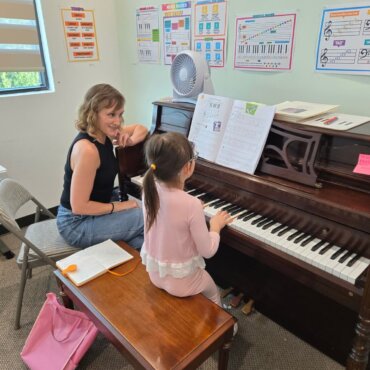
Age matters less than many people think. A six-year-old might need several months to learn the lines and spaces of the staff, but will often copy the teacher’s relaxed hand position without any trouble. An adult usually picks up the reading side quickly and then has to spend extra time getting a weak fourth finger to cooperate.
Goals matter too. Strumming chords on the keyboard so you can sing along takes far less time than preparing a Clementi sonatina for a recital, so say what you are aiming for in your first lesson.
Finally, there is feedback. Flat fingers, a locked wrist or a habit of guessing at notes feel fine at first and cause trouble later. A teacher spots them in week two instead of year two, which is why self-taught players so often stall once the music gets harder.
A typical timeline for beginners
Here is what we usually see in the first year with one lesson a week and practice on most days, though plenty of students are ahead of this or behind it.
During the first month most of the time goes into learning the keyboard itself. A student finds middle C, learns to keep a beat and plays little tunes with one hand at a time. By the third month, notes on the page start to mean something, and short pieces use both hands. Around the six-month mark a lot of students can play an easy song with chords in the left hand, and many of them pick their first recital piece then.
After a year, a lot of students can read new beginner music with only a little help, play with some dynamics and handle scales in a few keys. The next two to four years are when intermediate pieces, the pedal and sight-reading easier music come in, along with the confidence to play for friends and family.
If you are behind this schedule, that is normal. Holidays, school exams and busy seasons slow everyone down. What matters is that you keep coming back to the bench.
Do kids or adults learn faster?
Neither group really has the edge. A seven-year-old may need a year before reading music feels easy, while an adult might be reading well after a few months and still find it hard to make the two hands move independently. Adults often make fast progress in the beginning because they practice with a clear goal. Children tend to catch up later, partly because they repeat things a lot and are not afraid to experiment.
The best age to start is simply the age you are now. Century Fine Arts teaches children, adults and seniors alike.
How to learn piano faster
A few habits help almost everyone. Play new passages slowly, even at half speed, so your fingers learn the right notes instead of the mistakes. Work on two or three measures at a time and connect them once each part feels easy. Try to read a little new, easy music every day, even if it is only five minutes. A metronome is useful for keeping the rhythm steady, and it also lets you see progress as the tempo goes up over the weeks. If something in the week was confusing, write it down and ask your teacher at the next lesson.
Our article on a beginner piano practice routine breaks a daily session into simple steps. If you are unsure about equipment, read whether you need a piano at home to start lessons.
How long until you can play a real song?
Most students play a recognizable melody within the first few lessons and a full song with both hands within a few months. A favorite piece is often the best motivator, so tell your teacher what you love to listen to. Simplified arrangements of movie themes, hymns or pop songs are available for almost every level.
Start piano lessons in Sugar Land
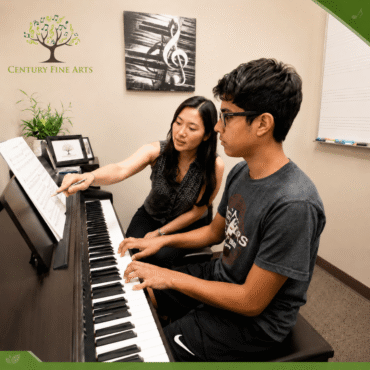
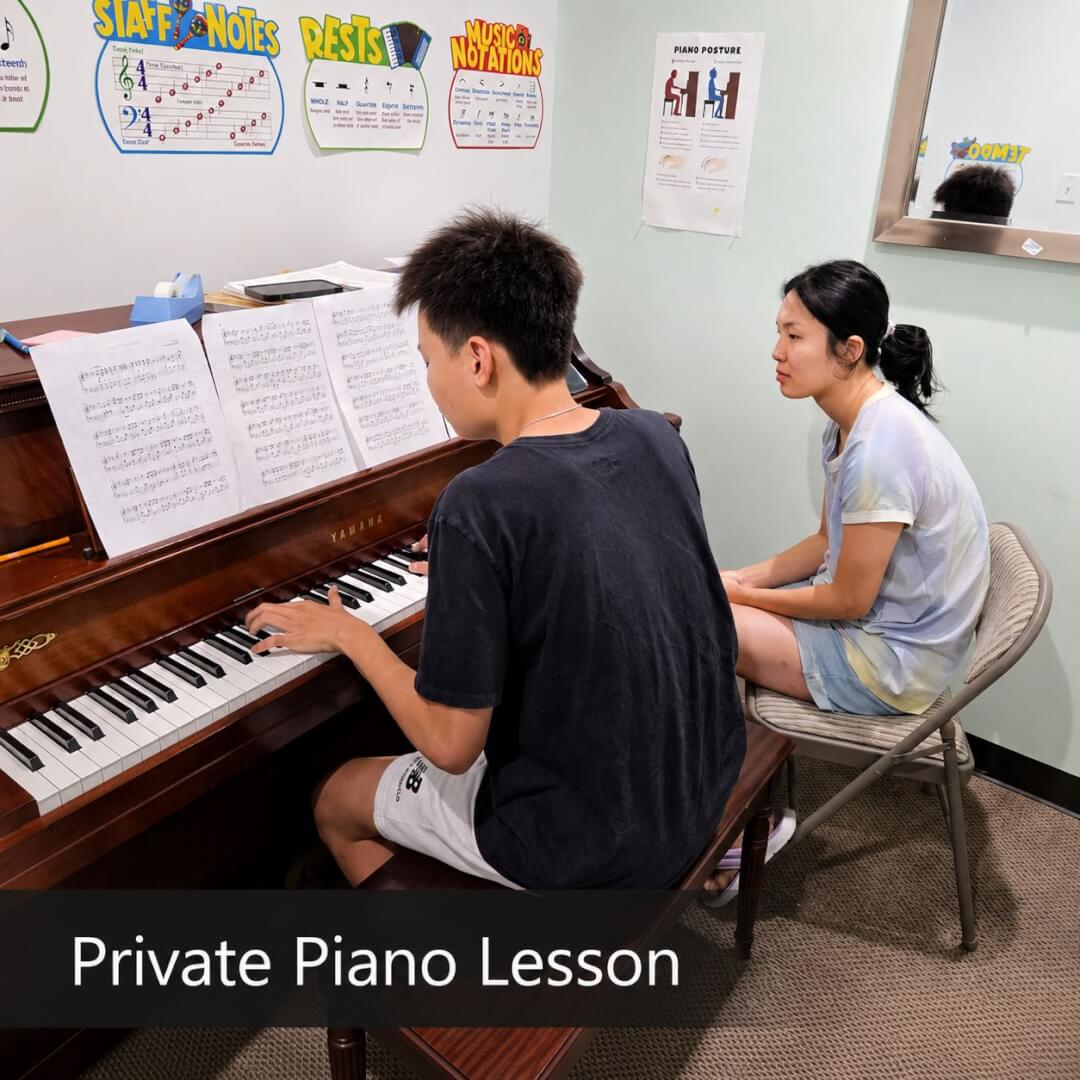
At Century Fine Arts, students of all ages take one-on-one piano lessons with a teacher who adjusts the pace to their goals. Tuition for private lessons includes the chance to perform in recitals and join ear training and theory classes, which helps students read and understand music sooner.
Not sure where to begin? Book a free 15-minute trial lesson at our studio at 3527 Hwy 6 S., Suite 220, in Sugar Land, or call 832-400-5980. We will show you what your first months of piano could look like.