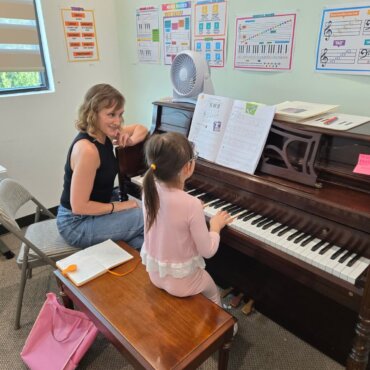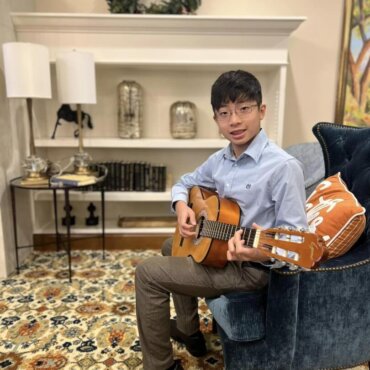
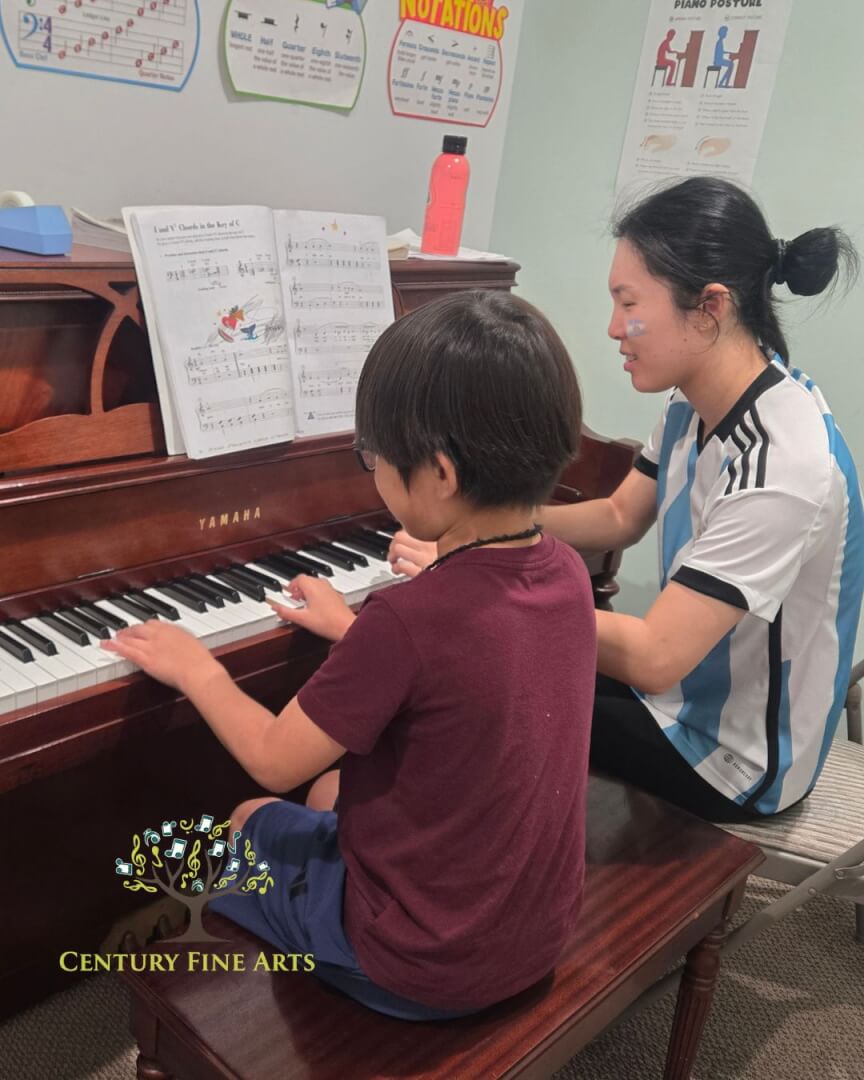
How Long Should a Beginner Practice Piano Each Day?
For most beginners, piano practice does not need to take an hour a day. In fact, shorter and more focused sessions are often much more useful, especially for children who are still learning how to concentrate at the instrument.
A young beginner may do well with 10 to 15 minutes at a time. Elementary-age students often work comfortably for 15 to 20 minutes, while older children, teenagers, and adults may be ready for 20 to 30 minutes.
Those numbers are only a starting point. What the student actually does during practice matters much more than watching the clock. Ten focused minutes spent solving a difficult passage can be more valuable than half an hour of playing familiar sections without a clear goal.
A good routine should fit the student’s age, attention span, current ability, and weekly lesson assignment. It also needs to work with the family’s schedule. A practice plan that is too demanding to repeat consistently usually needs to be simplified.
A Realistic Starting Point for Beginner Piano Practice
There is no single practice schedule that works for every piano student. Two children of the same age may have very different attention spans, assignments, and musical experience.
Still, these ranges can give families a practical place to begin:
- Younger beginners: about 10–15 minutes
- Elementary-age beginners: about 15–20 minutes
- Older children and teenagers: about 20–30 minutes
- Adult beginners: about 20–30 minutes, depending on goals and schedule
A student who has only recently started piano may have a small amount of material to review: a short exercise, a rhythm pattern, basic note reading, or several measures of a new piece. There is little benefit in stretching a practice session simply to reach a certain number of minutes after the student’s attention is already gone.
As reading, coordination, rhythm, and independence improve, practice time can grow naturally. The weekly assignment from the piano teacher should be a better guide than an arbitrary daily target.
Consistency Usually Matters More Than a Long Practice Session
One long practice session right before the next lesson may feel productive, but piano skills are built through repetition over time.
Students are learning several things at once. They are recognizing notes, remembering fingering, coordinating their hands, keeping a steady rhythm, listening for mistakes, and learning how one musical phrase connects to the next.
Returning to those skills several times during the week gives the student more chances to remember and strengthen them.
For example, a beginner’s week might include:
- 15 minutes of practice on four or five days
- Starting each session with the teacher’s main assignment
- Spending a few minutes on the section that needs the most work
- Finishing with a familiar piece the student enjoys playing
This is usually easier to maintain than postponing everything until the day before the next lesson.
Missing a day occasionally is not a problem. The goal is to create a routine the student can return to without making piano feel like a punishment.
What Should a Beginner Actually Do During Piano Practice?
Setting a timer is easy. Knowing how to use those minutes well takes a little more planning.
A beginner’s practice session can be divided into a few simple parts.
Check posture and hand position
Before playing, the student can take a few seconds to sit comfortably and check the position of the hands and arms. Building these habits early is easier than trying to correct them later.
Start with a short warm-up
A simple five-finger pattern, scale, rhythm activity, or note-reading exercise can help the student settle in and prepare to play the assigned music.
Focus on the week’s assignment
Beginners do not always need to play a piece from beginning to end over and over. It is often more productive to work on one line, a few measures, or one hand at a time.
If the teacher pointed out a specific problem during the lesson, that section is usually a good place to spend extra time.
Slow down when something is difficult
A common beginner habit is repeating the same mistake at the same speed. Playing more slowly gives the student time to look at the notes, think about fingering, hear the rhythm, and notice how the hands are moving.
The goal is not simply to repeat a difficult section. The student should have enough time to understand what is going wrong and make a correction.
End with something enjoyable
Finishing with a piece the student already knows can make the session feel more complete. It also gives beginners an opportunity to hear what comfortable, confident playing feels like after spending time on more difficult material.
Can Piano Practice Be Split Into Two Short Sessions?
Yes. For some beginners, especially younger children, two short sessions work better than one longer practice period.
A 15-minute daily goal does not necessarily have to happen all at once. A student might practice for several minutes after school and return to the piano for another short review later in the day.
This approach can also work when the assignment contains several different skills. One short session might focus on notes and rhythm, while the second is used for the assigned piece.
Splitting practice is not a shortcut. If shorter sessions help the student stay focused and approach the piano with less resistance, they may be more productive than forcing one long session.
How Parents Can Support Piano Practice Without Taking Over
A parent does not need to play piano to help a beginner build a useful routine.
Simple things can make a difference: choosing a reasonably consistent practice time, reducing distractions, making sure the student can find the music, and reviewing any notes or assignments provided by the teacher.
Instead of correcting every mistake, parents can ask questions that help the student think:
- What did your teacher ask you to work on this week?
- Which part feels hardest today?
- Can you try that section more slowly?
- Is there something you want to ask your teacher about at the next lesson?
Constant corrections from across the room can have the opposite effect. A child may begin waiting for the parent to identify every mistake instead of learning to listen and solve smaller problems independently.
It is also helpful to notice specific progress rather than evaluating the entire practice session. Saying that a difficult section sounded more comfortable on the second attempt gives the student useful feedback without creating unnecessary pressure.
What If a Child Does Not Want to Practice Piano?
A child who resists practice does not necessarily dislike piano. Sometimes the assignment feels too large. Sometimes the student does not remember what the teacher asked them to do. In other cases, simply getting started is the hardest part.
Before increasing practice time or creating stricter rules, try reducing the size of the first task.
For example, ask the student to:
- Play only the first line of the assigned piece
- Practice with one hand first
- Repeat one difficult measure slowly three times
- Review the teacher’s notes before playing
- Practice for five focused minutes and then decide what needs more work
A smaller task often feels easier to begin. Once the student is engaged, continuing may come naturally.
If practice regularly becomes frustrating or leads to arguments, bring it up at the next lesson. The teacher may be able to reduce the assignment, divide it into clearer steps, or show the student a different way to approach the difficult material.
During private piano lessons in Sugar Land, students can learn more than notes and songs. A teacher can also show them how to practice effectively, recognize a problem, and work through difficult sections between lessons.
How Can You Tell Whether a Piano Practice Routine Is Working?
Progress for a beginner does not have to mean learning a new piece every week. Smaller changes often tell you more about whether the student is developing good practice habits.
Over time, you may notice that the student can:
- Begin the assigned music with less hesitation
- Recognize notes more quickly
- Keep a steadier rhythm
- Notice and correct some mistakes without help
- Remember fingering from a previous lesson
- Play difficult passages with less tension
- Explain which parts still need work
These are useful signs because they show that the student is learning how to practice rather than simply spending a certain amount of time at the piano.
When Should a Beginner Increase Piano Practice Time?
Practice time can gradually increase as the student receives more material and becomes able to stay focused for longer periods.
There is usually no reason to jump suddenly from 15 minutes to 30. Adding another five minutes may be enough. In some cases, keeping the same total practice time but organizing it better can accomplish more.
For example, a 20-minute practice session might include:
- 3 minutes for a warm-up
- 5 minutes for note reading or rhythm
- 10 minutes for the assigned music
- 2 minutes for a familiar or favorite piece
The exact breakdown does not need to be the same every day. As the music becomes more challenging, the teacher can help the student decide whether more practice time is needed or whether the existing routine simply needs more structure.
Keep Beginner Piano Practice Manageable
The best practice routine is not the longest one. It is a routine the student can follow regularly while continuing to enjoy learning music.
Begin with an amount of time that feels realistic. Use the teacher’s weekly assignment as the main guide. Break difficult music into smaller sections instead of repeatedly playing the whole piece, and increase practice gradually as the student becomes more independent.
Learning how to practice is part of learning piano. Beginners need time to develop the habit of listening carefully, recognizing a mistake, slowing down, trying another approach, and noticing improvement.
If you are looking for structured piano instruction in Sugar Land, explore piano lessons at Century Fine Arts. You can also visit the Century Fine Arts homepage to learn more about the school and available music programs.
Frequently Asked Questions
Is 10 minutes of piano practice enough for a beginner?
For a young beginner, 10 focused minutes can be a perfectly reasonable starting point. The important part is having a clear assignment and using the time purposefully. Practice can become longer as the student’s concentration, skills, and independence improve.
Should a beginner practice piano every day?
Daily practice can be helpful, but consistency is more important than creating a rule that is difficult for the family to maintain. Four or five productive sessions during the week may be better than insisting on daily practice and turning missed days into a source of conflict.
Is morning or evening better for piano practice?
The best time is when the student is reasonably alert and the household is not too distracting. Some children concentrate well after taking a break following school. Others prefer practicing before dinner or earlier in the day on weekends.
Should parents sit with a child during piano practice?
Young beginners may need help understanding the assignment or getting started. As they become more confident, parents can gradually step back and allow the student to practice more independently while remaining available when help is genuinely needed.
What should a beginner do if they keep making the same mistake?
Make the problem smaller and slow it down. Try practicing one hand at a time or working on only the difficult measure instead of replaying the entire piece. If the same problem continues, mark the section and ask the teacher to review it during the next lesson.