Yes, a lot of children learn two instruments at the same time, and what they learn on one often helps on the other. It goes best when the child has already played the first instrument for six months to a year, really wants the second one and has enough free time in the week to practice both without getting worn out. For a child who is brand new to music, it usually works better to start with one instrument and add the second later.
Good combinations
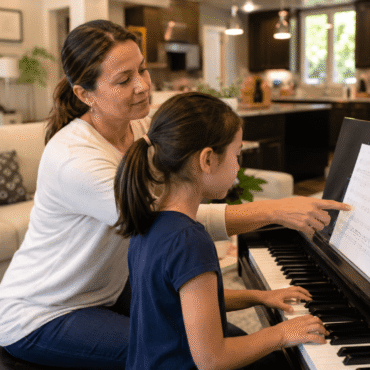
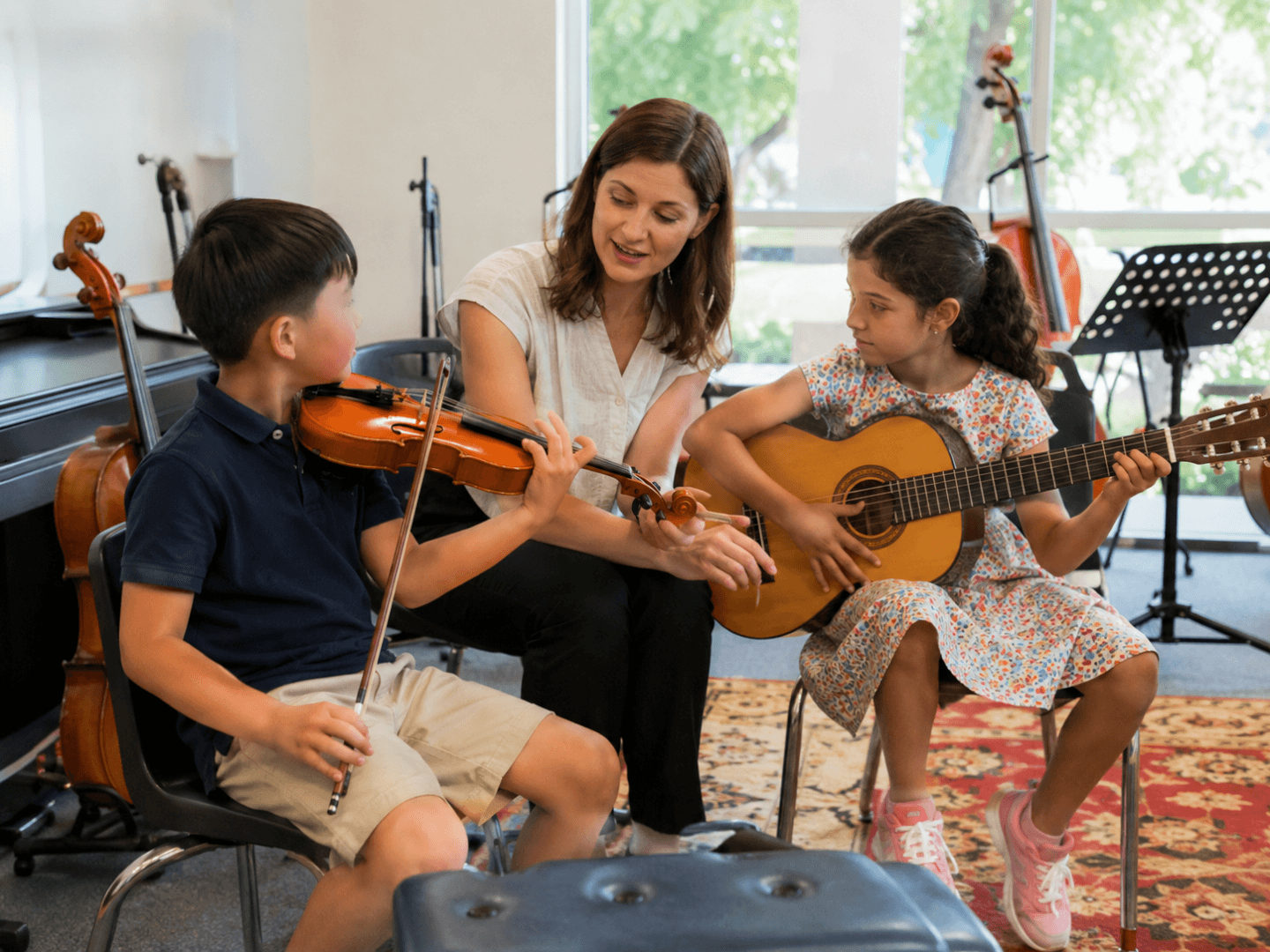
Piano and voice are probably the most common pair we see. Piano and violin also go together nicely. And for a kid who wants to sing their favorite songs while playing, guitar with voice makes a lot of sense.
In our experience it works best when the idea of a second instrument came from the child, not the parent, and when the child is past the beginner stage on the first one and reads fairly well. The week also needs room for two lessons and two practice times, and the child should still be enjoying practice rather than falling behind.
When it is better to wait
Starting two instruments at the same time as a total beginner splits attention. Each instrument has its own posture, notation habits and physical demands. A seven-year-old learning violin hold and piano hand position in the same week may progress slowly on both and feel discouraged.
It is also worth waiting if school, sports and other activities already fill most evenings. Two instruments with rushed, irregular practice usually produce less progress than one instrument practiced well.
How the skills transfer
Learning a second instrument is usually faster than learning the first, because many skills carry over:
- Reading music. Rhythm, note values and dynamics are the same on every instrument.
- Ear training. Recognizing intervals and melodies helps with any instrument.
- Practice habits. A child who knows how to break a piece into small chunks applies that everywhere.
- Theory. Scales, keys and chords look different on each instrument but follow the same rules.
Students who take music theory or ear training classes often find the second instrument clicks even faster. We explained why in what music theory is and whether students need it.
How to schedule practice for two instruments
Practice time can grow slowly. One easy approach is to keep a single session and divide it, maybe 15 minutes on the main instrument and 10 on the new one. Over time the split can change.
Keep both instruments visible and easy to reach. A violin sitting out on a stand gets played more than one zipped in a case under the bed.
Should a child choose a “main” instrument?
Usually, yes. Having one primary instrument gives a clear focus for recitals, auditions and long-term goals. The second instrument can be lighter, a creative outlet or a complement to the main one. As kids get older, the balance may shift, and that is fine.
When it is too much
Pay attention if your child seems stressed, complains about practice all the time, starts slipping on the first instrument or stops enjoying music. If that happens, go back to one instrument for a while. That is not giving up. It keeps music something they like.
Lessons on more than one instrument in Sugar Land
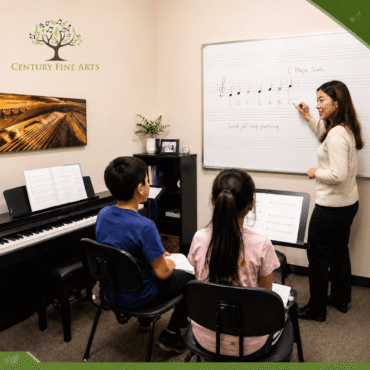
Century Fine Arts teaches piano, violin, guitar and voice, so siblings or students exploring a second instrument can take lessons in one place. Teachers can coordinate goals and practice plans across instruments.
Explore our lesson options or book a free 15-minute trial to let your child try a second instrument. Call 832-400-5980 with questions.