Most voice teachers recommend starting formal voice lessons around age 7 or 8, and that is also the guideline we use at Century Fine Arts. By then, children can follow instructions about breathing and posture, match pitches more reliably and focus for a 30-minute lesson. Younger kids can absolutely sing every day, in choirs, music classes and around the house. Formal technique simply makes more sense once a child is ready to practice it carefully.
There is no upper age limit. Teens, adults and seniors all benefit from voice lessons.
Why not start voice lessons at 4 or 5?
A young child’s vocal folds are small and still developing. Preschoolers often sing loudly and with plenty of enthusiasm, which is wonderful, but they are not yet able to control breath, volume and pitch in the ways a voice lesson teaches. Pushing technique too early can lead to strain or turn singing into a chore.
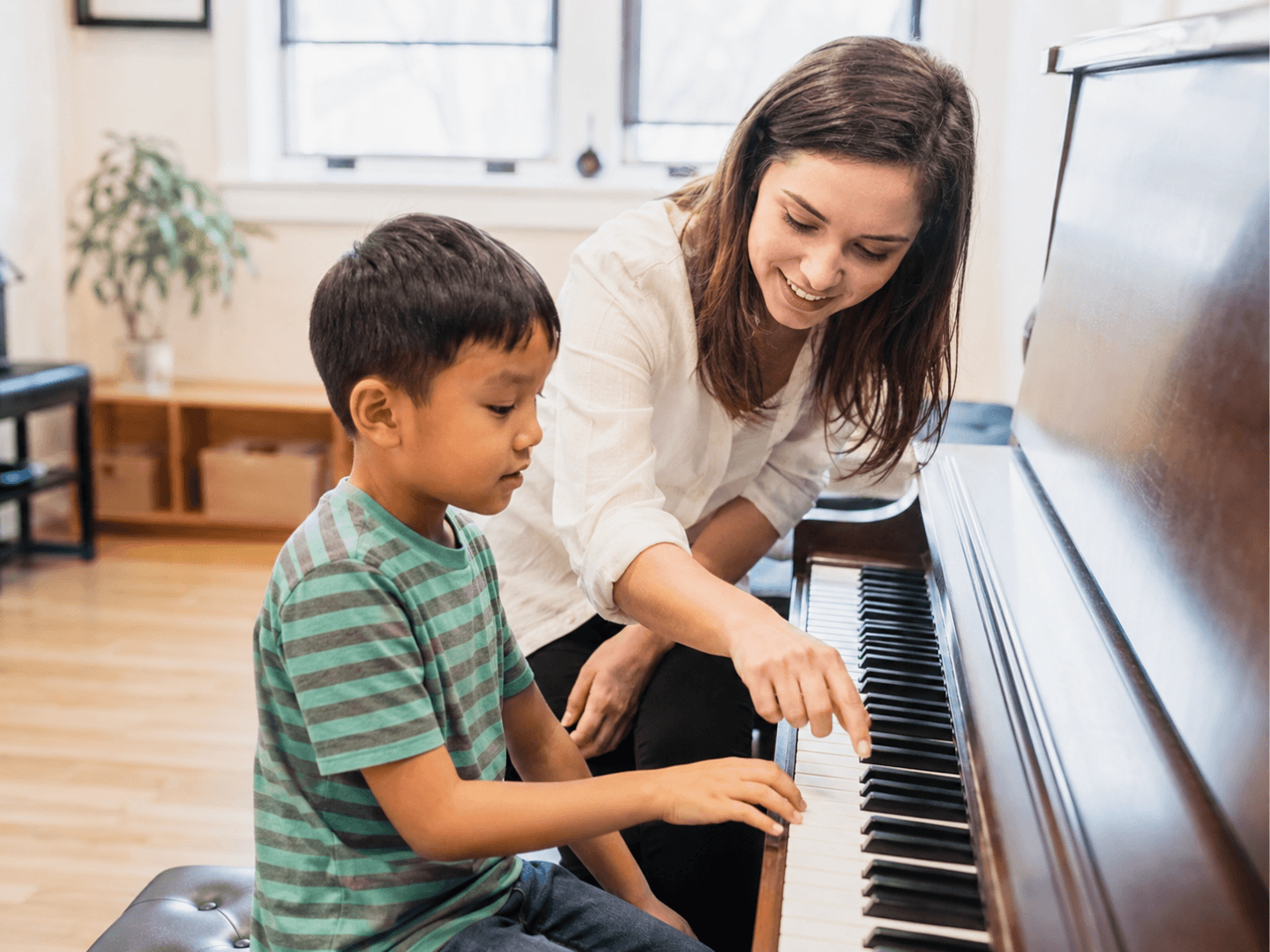
Before age seven, most children get more out of general music activities than formal voice training. Singing simple songs at home, rhythm games, a children’s choir or some early piano all help them hear pitch and feel confident, and none of it asks a young voice to do things it is not ready for.
How to tell if your child is ready
A child who is ready for voice lessons usually sings on their own a lot and enjoys it. They can copy a simple note that you sing or play on a keyboard, and they can sit or stand and pay attention for 15 to 20 minutes. Many also start asking questions about singing higher or louder, or sounding “like the people on TV.”
If your child is seven or older and checks a few of these boxes, a trial lesson is a great next step.
What voice lessons look like for kids
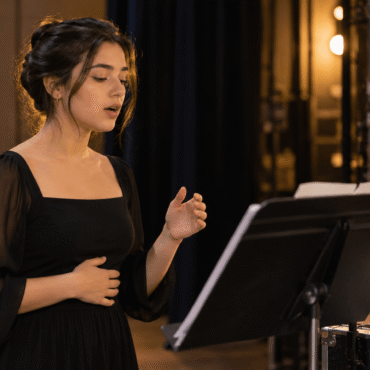
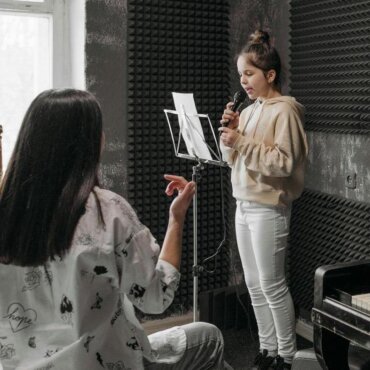
Voice lessons for kids are about healthy habits rather than big, powerful singing. A lesson usually starts with gentle warm-ups such as humming, lip trills and slides. The teacher works on breathing, so the child learns to take a low, relaxed breath without lifting the shoulders, and spends some time on matching notes and short patterns. The rest of the lesson goes to songs at the right level that the child likes, which might be Disney, musical theater, folk or pop.
A good teacher keeps the songs in a comfortable range for a young voice and stays away from heavy belting and forced high notes. That way children learn early that good singing should feel easy.
Starting in the preteen and teen years
Ages 10 to 14 bring big changes, especially for boys whose voices shift during puberty, but girls’ voices change too. Lessons during these years help students understand what is happening and keep singing safely through cracks and range changes. Many students also start auditioning for school choir, honor choirs or musical theater around this time, and a teacher can help them prepare.
Voice lessons for adults
Some adults think they waited too long. They have not. Adults usually pick up breath support and pitch control quickly, and many find their voice sounds much better than they expected once the tension is gone. If you have always thought you sing off-key, start with our article on whether anyone can learn to sing.
How much should a young singer practice?
For a seven- or eight-year-old, 10 minutes of practice most days is plenty: a short warm-up and a run through the current song. As students get older, practice can grow to 20 or 30 minutes. Singing should never hurt. If your child sounds hoarse or complains of a sore throat after singing, rest the voice and let the teacher know.
Voice lessons for kids in Sugar Land
Century Fine Arts offers private voice lessons for children from about age 7, as well as teens and adults with no upper age limit. Private-lesson tuition includes ear training and theory classes and chances to perform in recitals.
The 15-minute free trial can be a life-changing moment for a young singer. Book a trial online or call 832-400-5980. We are at 3527 Hwy 6 S., Suite 220, in Sugar Land.