Choosing the right violin size matters more than many parents expect.
A beginner does not automatically need a full-size violin. Children usually start with a fractional-size instrument that matches their arm length, hand size, and overall reach. The goal is simple: the violin should feel comfortable enough for the student to focus on learning instead of struggling to hold an instrument that is too large.
If your child is preparing to start violin lessons, here is what to know before buying or renting an instrument.
Violin Size Is Based on Fit, Not Just Age
Parents often ask what size violin a six-, seven-, or eight-year-old should use.
Age can be a useful starting point, but it should not be the final decision.
Two children of the same age can have very different arm lengths and body proportions. That is why violin sizing is better determined by the student’s actual reach and comfort.
Common violin sizes include:
- 1/16
- 1/10
- 1/8
- 1/4
- 1/2
- 3/4
- 4/4, or full size
Young beginners usually move through several sizes as they grow.
For families in Sugar Land who are considering music lessons, Century Fine Arts offers private instruction for students at different ages and experience levels.
How to Check Whether a Violin Fits
A simple fit check can give you a good idea of whether the violin is appropriate.
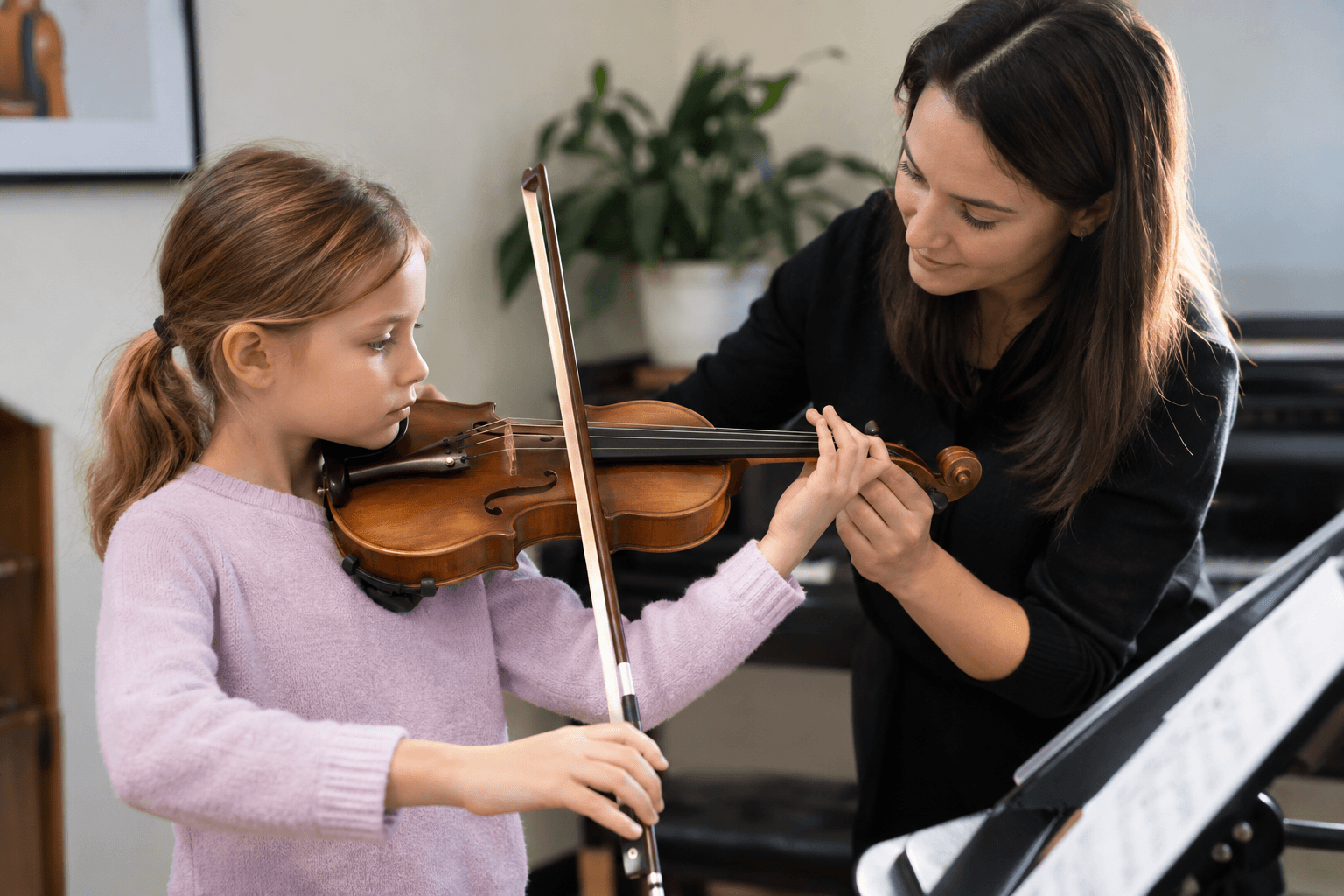
Have your child stand naturally with relaxed shoulders. Place the violin in the normal playing position on the left shoulder.
The student should be able to reach comfortably toward the scroll without twisting the body, lifting the shoulder, or stretching the arm excessively.
The left hand should also be able to return to the neck of the violin without feeling forced.
A properly sized instrument should allow the child to maintain a relaxed position.
If the student looks tense before even beginning to play, the instrument may be too large.
Why a Violin That Is Too Large Can Be a Problem
It can be tempting to buy a larger violin so your child can “grow into it.”
For a beginner, that is not always a good idea.
An oversized violin can make it harder to:
- reach notes comfortably;
- keep the left wrist and hand relaxed;
- control the bow;
- maintain good posture;
- play without unnecessary shoulder or arm tension.
A child who is constantly stretching to reach the instrument may begin developing habits that make learning more difficult.
Children grow quickly, but changing violin sizes is a normal part of learning.
It is usually better to use an instrument that fits properly now than one that might fit several years from now.
Signs the Violin May Be Too Large
The violin may be too large if your child:
- has to fully stretch the left arm to reach comfortably;
- raises the shoulder while holding the violin;
- struggles to place the fingers naturally;
- bends or twists the wrist into an awkward position;
- says the instrument feels heavy or uncomfortable;
- has difficulty controlling the bow because of the reach;
- becomes tired very quickly while practicing.
Beginners naturally need time to get used to holding a violin, so one awkward lesson does not automatically mean the instrument is wrong.
But repeated discomfort is worth checking.
Can a Violin Be Too Small?
Yes.
A violin that once fit well can become too small as a child grows.
When that happens, the student may begin to feel cramped or restricted. Hand position can become less comfortable, and the instrument may no longer provide enough room for natural movement.
There is no fixed age when a child should move to the next violin size.
Growth is different for every student.
Instead of changing the instrument simply because another year has passed, check the child’s actual fit and comfort.
What if My Child Is Between Two Sizes?
If your child appears to fall between two violin sizes, do not automatically choose the larger one.
For a beginner, a slightly smaller instrument can sometimes be easier to control than one that requires too much reach.
The best choice depends on the student’s arm length, hand size, physical comfort, and playing experience.
This is one reason it can be helpful to have a teacher check the instrument before you make a final purchase.
Should We Rent or Buy a Beginner Violin?
Both options can work.
Renting is often practical for younger children because they may need to move through several violin sizes as they grow.
A rental program may allow you to exchange the instrument when a larger size becomes necessary.
Buying can also make sense when you know the correct size and expect the student to continue playing.
Whichever option you choose, do not focus only on price or appearance.
The violin should be comfortable, properly set up, and appropriate for the student’s current size.
A violin that looks beautiful but is difficult for the child to hold is not necessarily a good beginner instrument.
Should We Buy the Violin Before the First Lesson?
Not necessarily.
If you are unsure about violin size, it can make sense to speak with the teacher first.
A teacher can look at the student’s reach, posture, hand position, and comfort with the instrument before you invest in a violin.
That can help you avoid buying an instrument that needs to be replaced immediately.
Century Fine Arts offers private violin lessons in Sugar Land, TX for students who are just starting as well as those who already have experience.
An introductory lesson can also give parents a chance to ask about instrument size, practice setup, accessories, and what the student will need at home.
What Else Does a Beginner Violinist Need?
The violin itself is only part of the setup.
A beginner will usually also need:
- a bow;
- rosin;
- a protective case;
- a shoulder rest or pad when appropriate;
- lesson materials;
- a comfortable place to practice.
There is no need to buy every accessory before the first lesson.
A teacher may have specific recommendations depending on the student and instrument.
The Right Violin Should Feel Manageable
The best beginner violin is not necessarily the biggest or most expensive one.
It is the instrument that fits the student well enough to allow comfortable posture, relaxed movement, and steady learning.
If you are unsure about your child’s violin size, use measurements as a starting point, but do not rely on a chart alone.
Have the student actually hold the violin and, when possible, ask a teacher or string-instrument specialist to check the fit.
For families looking for violin instruction in Sugar Land, you can learn more about Century Fine Arts, explore violin lessons in Sugar Land, or find Century Fine Arts on Google Maps.
The goal is to give your child an instrument that feels comfortable enough that they can focus on learning, practicing, and enjoying music.