by Sean Stone-Ashe
Music education has been my profession for the last decade, and has profoundly shaped my life experience during that time. Teaching is undoubtedly a job that provides some interesting, entertaining, and frustrating days. However, for this article I would like to focus on a more long-term perspective on teaching music.
One great joy of teaching music both in a public school and especially in private lessons is the ability to work with the same students for many years. While many teachers see students for one year of their life’s journey, I get to see students for so much longer! During that time, I am able to observe so much personal growth in a single student, and today I want to discuss some of the most impactful areas of personal growth that I have witnessed in my students.
1. Curiosity
Something that I used to find so peculiar about teaching is that students so rarely have any questions. I habitually end all of my lessons by asking the student if they have any questions. I want to ensure they understand everything we went over or perhaps answer a random question about the music or the guitar they may have. It is so rare — I’m guessing under 1% of all lessons with younger children — that students take that opportunity to ask a question.
However, as students get older, their curiosity inevitably starts to kick in about music and I start to receive much more frequent questions. What finger should I use? Does a crescendo make sense here? What is a piece you would suggest for me to learn? Is this piece one we can learn together?
I love reaching this phase of heightened curiosity with a student because it starts to make teaching feel more like a dialogue and less of a two-person rehearsal that I am managing. Discussing students’ questions makes me feel more connected to them personally, and I am sure they would say the same!
2.Motivation
For most students who start music lessons at a young age, attending lessons and practicing can feel as much of an obligation as it is a hobby. As adults, we know the commitment it takes to become skilled in any craft. But, children rarely understand that just because you dream of being good at something doesn’t mean you are automatically good at it. And, if they have realized they aren’t yet good at something, they may not understand how close they could be to becoming good at it if they just work consistently towards that goal.
What this means is that few students begin their musical journey with adequate motivation to really accomplish what they are capable of.
However, over time this changes. Maybe a student sees a video of a cool piece they want to learn, or they hear a peer who is very good at their instrument. Or perhaps they achieve an important milestone of their own such as giving their first performance.

Along the way, somehow most students experience a spike in their motivation. As a teacher, I notice these jumps because every week they are coming to a lesson with obvious progress made on their piece. Details we discussed are happening already rather than needing reminding. Sometimes students share goals they have made on their own with me.
These moments feel very special to me because I think of how some of the best times in my life have been when I have felt strongly and intrinsically motivated to accomplish something for myself. Feeling hungry for achievement is one of life’s greatest experiences, and being able to provide those moments and help students through those periods to move towards that accomplishment is something quite special about teaching.
3.Maturity
I’ve always considered music lessons to be a therapy session in its own way. As a student regularly attends music lessons, so many elements of their personality are revealed — and sometimes confronted — by our work together. Music students need good time management, the ability to listen, the ability to take constructive feedback, attention to detail and quality control in order to make good music.
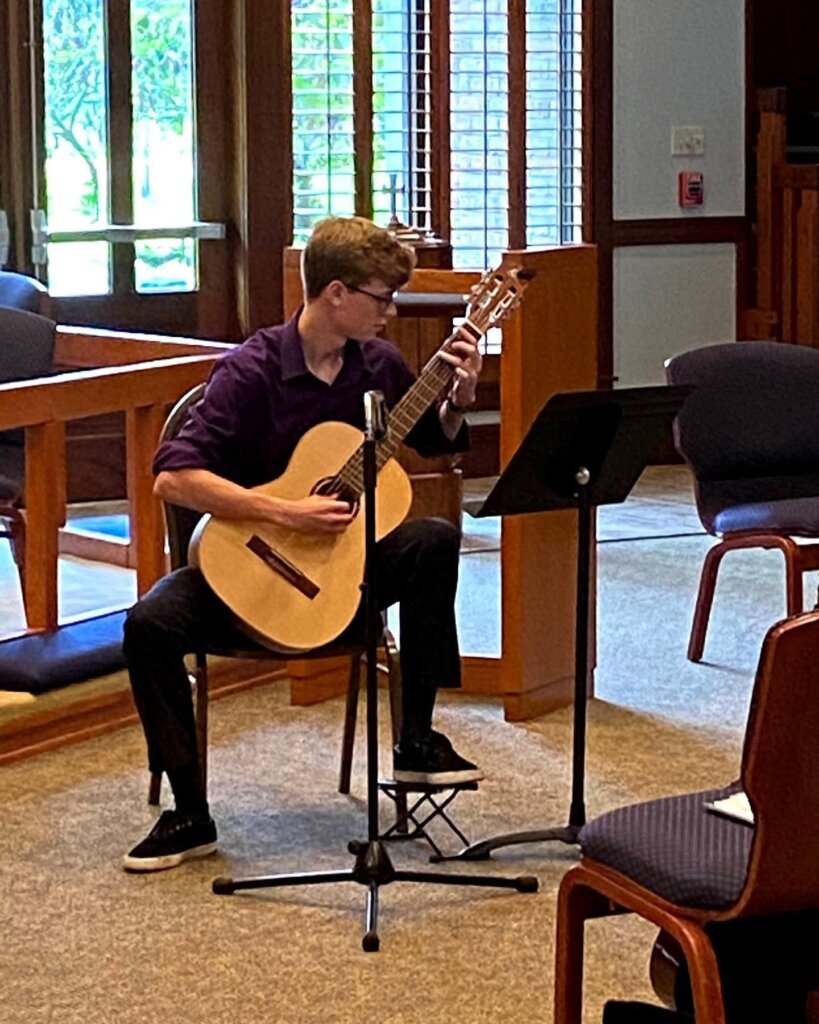
However, so many students lack at least some of these personality traits to be a successful musician. As a guitarist, one of the classic pitfalls when practicing is going too fast. Guitarists all have a “shredder” inside of them who wants to play fast and sound impressive. But, this mentality leads to a high degree of sloppiness on an instrument where sounding clean and refined is immensely challenging.
This means that one of my most frequent points made to students is that “you are going too fast.” After much correction, reminding and even rationalizing the need for slow practice with students, I eventually see the speed at which they play new or challenging music go down. My goal is always to see students play mistake-free from day 1 with a piece, even if it means taking it at a glacial speed!
When students reach this maturity it makes teaching so much less frustrating. And I imagine the student must be feeling less frustrated as well. Nobody likes making constant mistakes! When students demonstrate their maturity through slow practice — or anything else — I see that they care about what they are doing and that they listen and internalize the things I say.
I have long spoken about many of the ways that music education benefits students, and the topics discussed today certainly reflect those benefits. However, seeing students achieve these benefits is similarly rewarding and beneficial for me as a teacher. Apart from teaching being my profession, each student I work with represents a substantial investment of my limited time on earth, and seeing that work bear fruit is a prideful experience.
Knowing that I played some role in helping young people on their journey to personal fulfillment is a knowledge that I cherish, and an experience that is truly unforgettable.