by Sean Stone-Ashe
Throughout my own musical journey, I have met countless professional and aspiring musicians. From these encounters, I have learned what personality traits tend to make people more successful in the field of music. After all, becoming a strong musician entails learning a variety of highly specific skills over the course of a tremendously long period of time.
This blog will discuss some of the key personality traits of successful musicians. This information is largely anecdotal from my life spent among musicians. Furthermore, I think anyone can become successful in music despite not having some of these personality traits, and I even think it is possible to learn and improve some of these traits if they do not come naturally.
Being an Open-Minded Learner
Being an open-minded learner is in my opinion the single most important trait an aspiring musician must possess. Every student will experience their own level of success in the early days of playing – some people will master the early fundamentals of an instrument quickly, while others will struggle and take longer to gain that initial confidence. However, all students eventually reach a plateau or point of struggle that is preventing them from improving.
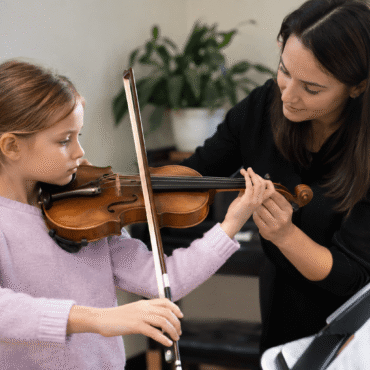
These moments are when your attitude as a learner will help you overcome many challenges. Whatever issue a music student is experiencing, it is highly likely their teacher had to overcome that issue at some point and has valuable insights about how to graduate from your current stage of playing.
Often these challenging periods are overcome by introducing a new style of practice to what you are currently doing, which means adapting to a new routine. Some people struggle to break their old habits and trust that this process will result in better playing. But, for those students who trust their teachers and follow their advice, who absorb feedback and take action to incorporate these new ideas into their work, they will become the most successful in the long run.
After all, learning music is a long journey. Imagine a student who has spent ten years in music lessons but never implemented the strategies their teacher taught them. Now, image a student who spent the same ten years in lessons but always faithfully executed their teacher’s advice. The second student will come out miles ahead as a musician simply because they were willing to take seriously the advice they received.
Kinesthetic Intelligence and Physical Relaxation
Making music is a skill with many important physical components. If you play an instrument or sing you must learn the proper technique to be able to play correctly and beautifully. This technical process will involve making many subtle changes to the way you naturally interact with the instrument. Ultimately, the goal of technique is to make playing an instrument or singing feel more natural so that you are using your body to make music in the most healthy and easy way possible.
However, for many people it is challenging to find that natural and healthy technique without some effort. Therefore, students who possess high kinesthetic intelligence (bodily intelligence) will be able to overcome these challenges more easily. By paying attention to how you are using your body while making music and being able to make subtle adjustments or retrain your motions, you can achieve that good technique. This all stems from the ability to constantly be aware of your body and how it is moving.
For me personally, I was not particularly strong with my bodily awareness when I started music. I had immense difficulty making changes to technique that my teacher suggested. However, over time I started to make some changes and actually learn how to be more aware of what my body is doing. Now I can make needed changes much more quickly, and I credit learning music with helping me to deeply improve my kinesthetic intelligence.
Competitive Mentality
Music is a discipline that requires constant self-evaluation and naturally lends itself to comparison between yourself and others. Therefore, it is easy to develop a competitive mentality when comparing your own growth to the growth of your peers. While it is important to not be discouraged by the success of others or to be too ruthless in your competitive instincts, successful musicians often have some natural inclination towards being competitive.
For me, I always wanted to spend the most time in the practice room of any of my peers. When I was in college and graduate school, I would spend several hours practicing every day – seven days a week with no exceptions. Through this regimen I was able to improve quickly and achieve many accomplishments. I think that if I had not been so competitive in my approach, I likely would never have gotten as good at the guitar as I have now.
That being said, as I have grown older and relaxed more, I think my relationship to music is healthier than it was when I was younger. Ultimately, it is better to compare yourself to previous versions of yourself and always push yourself to improve through that lens.
There will almost always be somebody who can play better, is more experienced, or has some natural advantage to you in the field of music. So, it is important to not be too brutal to yourself in pursuit of unattainable goals. However, by reaching for those incredible heights, you will be able to push yourself much farther than might otherwise be possible, and there is something to be said for that drive for achievement.
Ultimately, any person can become successful in music through their own path. As long as you are willing to learn new things, make changes, and work consistently over the course of many years, you should be able to find success in music. While there are certainly personality traits that make learning music a more natural process, at the end of the day your success or failure will be a reflection of the work you put in to become the person you want to be!