by Sean Stone-Ashe
As a music student, it is highly beneficial to record yourself performing your music, both in actual performances and during your practice. With the prevalence of smart phones, recording yourself has never been easier. And a well-positioned smart phone will actually produce a fairly nice-sounding recording that can give you an accurate sense of how you sound. You certainly don’t need to purchase professional equipment.
This blog will discuss the key benefits to recording yourself and explain why all musicians should do it!
Focus On Your Sound

As musicians, we can sometimes lose touch with the reality of how we sound. This happens because the task of making music is physically demanding, and if you are overly focused on the physical components of music-making, then you can turn a deaf ear towards how you actually sound.
When I was a music student, I experienced several instances of my teachers telling me that I sounded a particular way while playing that needed to be fixed. Often, I completely dismissed these critiques because I did not hear what they were talking about. However, when I would go home and record myself, I could actually hear those flaws because I could focus entirely on listening to my sound when I didn’t have to produce that music simultaneously.
An added benefit of learning to focus on your sound in this way is that over time you do start to listen better to yourself as you are playing. As you become more in touch with your sound while practicing, you can fix things more easily and use your ear to guide music-making in the moment. However, I never would have been able to achieve this ability if I had not recorded myself during practice.
Great Performance Practice
I always tell my students that they need to alter the way they practice as they get close to a performance date because the experience of performing is so different from the experience of making music during practice.
The very best way to practice for a performance is to simulate the experience of a performance. This can be done by performing for family or friends in a comfortable setting, or by recording yourself.
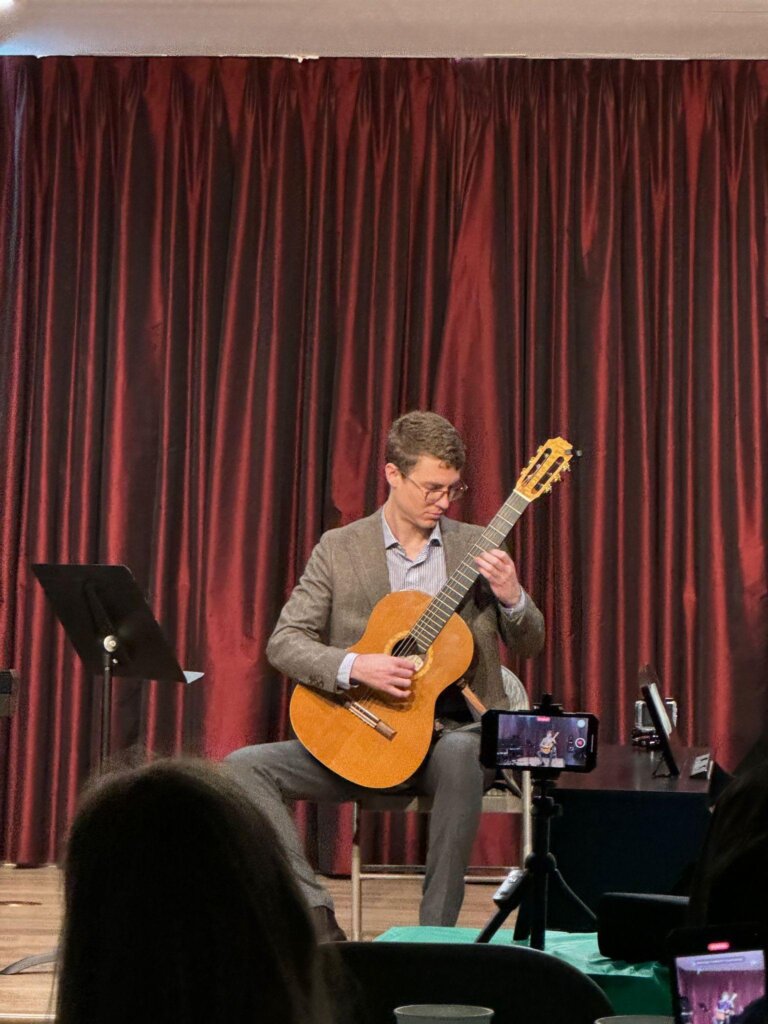
Whenever you switch the microphone or video camera on and start recording yourself, the feeling of pressure is elevated. If you have made it 90% of the way through a recording and it’s gone supremely well, I guarantee you will start to feel quite nervous as you finish up the piece. This happens because we all understand that having an outstanding recording of our playing is something that can be shared with others and lasts forever! So, this process can really get your nerves going even in the practice room, and doing so will more adequately prepare you for a live performance.
Posterity
At the end of the day, it is special to be able to look back on your playing over time and appreciate music you haven’t played in years or to hear your growth as a musician over time. Even if recordings aren’t perfect, they are great to be able to rewatch in the future and cherish.
Often the flaws in your recordings won’t even be apparent after a few years. When we are working on a piece of music, our level of focus on details is so high that it feels impossible to get everything right. But, when you haven’t put in that level of focus on a piece in years, it becomes easier to simply enjoy the listening experience!
* * *
Recording yourself is an outstanding pedagogical practice that will no doubt improve your listening and performing skills as a musician.
My recommendation is to make recording a daily habit. If you have access to a smart phone, plan on recording a small excerpt from your practice every day and listen back to make sure it sounds exactly like you want.
Additionally, it would be helpful and enjoyable to make a weekly tradition of performing for your family at home and taking a video recording of the performance. If it doesn’t go well, you never have to watchit again! But through this process, you will obtain several nice recordings of your playing you can look back on and enjoy in the coming years!