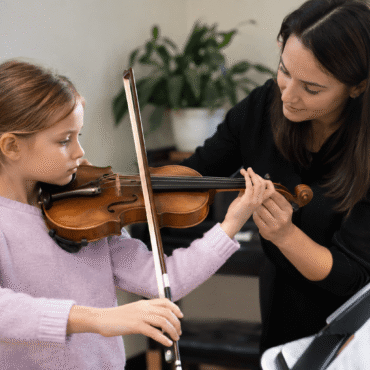
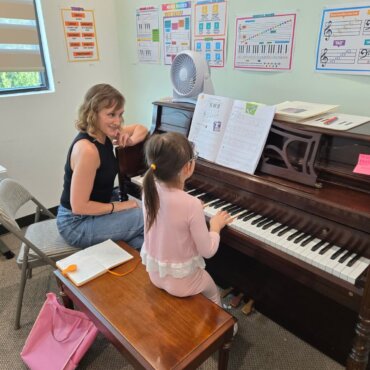
Music is a complicated subject containing many interconnected branches and pathways. In order to become a successful musician, students of music must be exposed to a wide range of musical disciplines that form a
holistic music education.
This blog post will discuss the most important aspects of a well-rounded music education, and describe how those smaller disciplines form a strong musician.
Primary Instrument
The most important part of any music education is determining a primary instrument. Your primary instrument is basically the thing you do best. My primary instrument is guitar, though I have experience with piano and vocal music as well.

For most people, their primary instrument is what made them inspired to learn music in therst place. Perhaps they heard an outstanding guitar or vocal performance, and they knew they wanted to be capable of that as well.
However, for many people learning a primary instrument is the only part of a music education they ever receive.
While being able to play an instrument or sing is the most important component of being a musician, most students become far more successful when they incorporate the following components of a well-rounded music education.
Music Theory
Music theory is a loaded term that can mean anything from learning how to read music with its abundance of notes and symbols, to abstract discussion of harmonic progressions, or the form of classical pieces. All of these elements are important to a musician because they give the musician tools and vocabulary to understand the music they hear, and to create music that is pleasing to others.

Imagine staring out your window at the outside world, but pretend that you had no vocabulary to identify anything you see outside. If you are unable to discern through your visual understanding the di erence between the trees, fences, or cars, then reality might appear as a confusing amorphous blob!
Listening to music can feel similar to this analogy without proper understanding of music theory. If you don’t know what to listen for, you will hear less of what is going on, and the music will be challenging to describe in any meaningful way.
Similarly, when you are playing your primary instrument, you can incorporate your understanding of music theory to show the audience exactly what is happening in the music, and therefore give better performances.
Ear-Training
Ear-training is a discipline that is adjacent to learning music theory. Some people consider music theory to be where you learn about the concepts of music while ear-training actually allows you to hear those phenomena in
music. There is no point in learning what a plagal cadence is in your music theory class if you can’t actually recognize a plagal cadence in a piece of music you hear!
I found this part of music education the most frustrating, but I ultimately grew the most as a musician by building my con dence with listening (aural skills).

Performing
Music is a language that connects people, and it is meant to be shared! Performing can be a scary experience for people but without the motivation of performances, students are much less likely to be successful.
Musicians should always be performing not only to build their con dence as a performer but because sharing your music with others may be the single most impactful aspect about being a musician!
Learning music is not just about learning where to place your ngers to create sound on an instrument. It is about learning to speak through music, and move people with your music. To this end, it is crucial for musicians to receive a well-rounded music education that promotes musical understanding, musical excellence, and develops the student not only as a musician but as a strong, con dent person overall.